


Homeowner insurance premiums in the Cape Fear will increase beyond the statewide average per a settlement the state announced with the insurance industry on Tuesday.
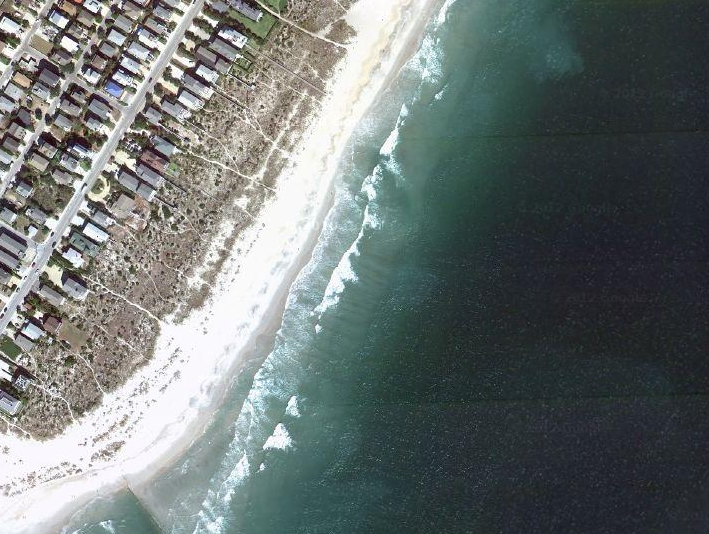
Base rates on mainland New Hanover, Brunswick and Pender counties will rise 8.6 percent, while those on the area’s barrier islands will experience a nearly 20 percent hike–the largest individual increase in the state.
The statewide average is 7 percent.
N.C. Insurance Commissioner Wayne Goodwin on Tuesday signed a settlement agreement with homeowner insurance writers sealing the rate increases, which vary by territory in North Carolina. The insurance industry initially asked for higher–a statewide average increase of 17.7 percent, and 30 percent for the entirety of this coastal area–but will receive what amounts to $237 million less in payments from policyholders.
The coast is typically slotted for higher increases than the rest of the state due to perceived hurricane risk.
“As Department of Insurance (DOI) experts spent months studying the insurance companies’ request, it became apparent that some increase was justified, largely due to the steadily rising cost of reinsurance related to hurricane risks and ongoing concerns regarding availability,” a DOI press release explained Tuesday.
But to groups like the N.C. Business Alliance for a Sound Economy (BASE), which has fought for rates it considers more fair and based on actual claims history, the settlement is another example of parties picking on the coast.
Noting the approved statewide average increase of 7 percent, “Yet again, the coastal barrier islands essentially got 20 percent,” said BASE Governmental Affairs Director Cameron Moore. “They got above the requested statewide average rate increase of 17.7 percent. We went above and beyond that.”
Coastal officials, and resolutions from various municipalities in the area, have contended the homeowner insurance ratemaking process is unfair to the beach areas as the group that submits the rate-change requests, called the N.C. Rate Bureau (NCRB), relies heavily on hurricane-risk speculation and not actual claims history. Groups like BASE have said the inland territories are just as vulnerable to damage and that most wind-damage claims since the early 1990s originated inland, as far west as the mountains.
But according to NCRB’s models, the coast deserved special attention.
“The coastal territories are most vulnerable to hurricane losses,” said supporting documents NCRB filed with its initial request for increases, notably for 30 percent in the Cape Fear. “The estimated loss costs are highest in coastal territories 7 and 8, as well as territories 48 and 52,” which include southeastern North Carolina.
But Goodwin in October 2012 slammed NCRB’s requested increases as “excessive and unfairly discriminatory.” He challenged the data and methodologies, said the request didn’t seem to “accurately and reasonably” reflect actual claims, and scheduled the matter for a hearing in June. (Related story)
Tuesday’s settlement cancels that hearing and sets the increases for an effective date of July 1. The changes will apply to all policies created or renewed on or after that date.
Speaking broadly, Goodwin called the settlement balanced.
“Homeowners insurance is a very complex issue. We face a great challenge in making sure that it is not only affordable, but available, to consumers across the state,” he said. “I feel this settlement helps strike that balance, and I am pleased that the increase will be significantly smaller than what insurers originally requested.”
DOI on Tuesday noted the last request from the industry, in 2008, was for an average statewide increase of 19.5 percent. A settlement pulled it down to 4.05 percent.
But that settlement also gave mainland New Hanover, Brunswick and Pender counties a 30-percent increase, and 17.5 percent for the beaches.
Under the latest increase, the owner of a $150,000 home in Wilmington will, upon renewal, see his or her annual payment go from $1,616 to $1,754.
A Pleasure Island homeowner’s bill would go from $2,342 to $2,806 upon renewal.
But not all coastal areas are in for such increases.
Currituck, Dare, Hyde and Pamlico counties–lumped as one territory–will only see a 3.4 percent hike (though NCRB filed for 30 percent). Neighboring counties, including Beaufort, Camden, Chowan, Craven, Jones, Pasquotank, Perquimans, Tyrrell and Washington–also lumped as one–will see only a 1-percent increase (instead of the 30 percent requested).
Far inland, Wake County will see a 2.7-percent jump (NCRB asked for 11 percent).
Charlotte will see its base rates elevate 8.4 percent (as opposed to the filed-for 8.5 percent).
Click here to view Tuesday’s settlement agreement.
Click here to view the list of revised rates by territory.
Click here to view a map showing the state’s territories.
Ben Brown is a news reporter at Port City Daily. Reach him at [email protected] or (910) 772-6335. On Twitter: @benbrownmedia
