


More than once during last week’s annual conference of the N.C. Beach Inlet & Waterway Association, Sens. Bill Rabon and Harry Brown received mention as state lawmakers possibly taking a leadership role with coastal funding issues in the upcoming legislative session.
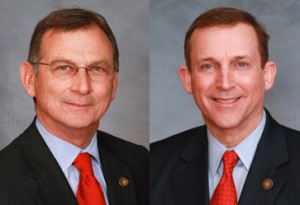
“We will be,” Rabon, the Republican from Brunswick County, assured Monday, though he noted he and Brown, the Republican from Onslow County, are at the moment simply exploring possibilities.
“We both recognize … we need dedicated revenue streams for several things on the coast that are unique and we’re just looking at ways to have those in the budget without adversely affecting other things.
“That’s what it boils down to,” Rabon said.
Co-chairman of the Senate Transportation Committee, he said general discussions about state sources in the recent past have looked at funding inlet dredging through the transportation budget.
“We can take that sand (dredged from the inlet) and put it on the beaches,” Rabon told Port City Daily during an interview in October. “The beaches are the shining star of the state. They’re for everyone; not just for the beach communities.”
And inlets, he reiterated Monday, “are a mode of transportation.”
He said he wasn’t necessarily surprised or impressed at the findings of a report in the hands of the legislature’s Marine Fisheries Committee recommending the establishment of coastal districts to fund inlet dredging. The districts, the report said, should be eligible for state and federal funding assistance and the local governments within could impose property assessments to meet project costs.
Additionally, the legislature could consider removing the cap on the sales and use tax of boats and drive the revenue toward a capital fund that could allocate dollars for the projects, said the report, authored by the N.C. Wildlife Resources Commission and the N.C. Division of Marine Fisheries and handed to the legislative Marine Fisheries Committee in September. A bill in the General Assembly’s last session mandated the report.
Recent interviews with Sen. Thom Goolsby (R-New Hanover) and Pat McElraft (R-Carteret) exhibited no fanfare for the coastal districts recommendation. Goolsby instead suggested rerouting current revenue streams and exploring the general fund or transportation sources.
Sen. Brown is co-chairman of the Marine Fisheries Committee, a research body that will examine the report for ideas in the upcoming session.
“There’s no question we’ve got to find a revenue source for dredging because the federal dollars have pretty much gone away,” Brown said Tuesday. “And it’s probably going to be boat registrations (or a similar source).”
He said the state needs to generate between $5- and $7 million yearly to address inlets. “For those of us living on the coast,” he said, “those inlets are like highways. We’ve got to keep them open.”
But the idea to generate project funding from increased fees on coastal boat registrations and fishing licenses didn’t receive much support from the exploratory report currently in the committee’s hands.
Any considerable hikes, the report warned, could cause “a decline in sales of the affected license. The decline in sales is inversely proportional to the increase in fees. It is possible that significant increases in fees could result in revenue reduced below current levels.”
Brown said that kind of impact is “always concern” when it comes to raising fees. “I hate to raise fees or taxes in any way, but I think anybody who has a boat and enjoys the coast realizes that if these inlets and waterways fill in, it’s going to take away what they enjoy.
“We’ve got to find a way to pay for it,” he said, “and users are the ones who are probably going to have to pay for it.”
Contact Ben Brown at [email protected] or (910) 772-6335. On Twitter: @benbrownmedia
