


The statewide slate of homeowner insurance-rate increases requested by the industry “appear to be excessive and unfairly discriminatory,” the N.C. Department of Insurance (DOI) said Tuesday.
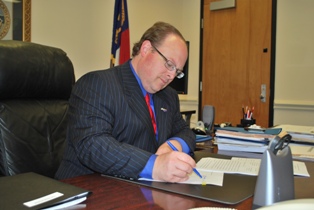
Insurance Commissioner Wayne Goodwin on Tuesday signed an order scheduling a hearing on the matter for June 3, 2013—two days after the proposed increases were set to take effect.
Goodwin’s order effectively takes the request off its tracks and throws doubt over whether the 30-percent hikes eyed for area coastal counties will hit as requested by the N.C. Rate Bureau (NCRB), the group representing insurers that write policies in North Carolina.
The hearing date “allows both the N.C. Department of Insurance and the N.C. Rate Bureau the time needed to go through the discovery process and prepare for the hearing,” noted Wilmington Regional Association of Realtors (WRAR) Governmental Affairs Director Kathleen Riely, one the area’s more outspoken opponents of such increases.
While the request would hand the coast the highest hike at 30 percent, NCRB’s request called for a statewide average jump of 17.7 percent. The Charlotte area was in line for an 8.5-percent increase. The western, mountainous territory would see 13.7 percent.
Coastal officials, and resolutions from various municipalities in the area, have contended the ratemaking process is unfair to the beach areas as NCRB relies heavily on hurricane-risk speculation, not actual claims history. Groups like the N.C. Business Alliance for a Sound Economy have said the inland territories are just as vulnerable to damage and that most wind-damage claims since the early 1990s originated inland, as far west as the mountains.
Goodwin’s order calls the NCRB’s request as filed inadequate, with insufficient or outdated data that doesn’t satisfy the NCRB’s burden of proof.
“The filing is not clear, concise, internally consistent or readily understandable,” the order says. “There is a pervasive lack of documentation, explanation and justification of both the data used, as well as the procedures and methodologies utilized in the filing.”
For one, “The filing appears to disregard the actual hurricane loss experience in North Carolina.”
Also, “The filing does not demonstrate that various values, including but not limited to, the loss, expense, exposure and average rating factor information contained in the filing, accurately and reasonably reflect actual historical experience.”
DOI additionally pointed out that NCRB “uses a methodology that is not allowed in North Carolina and has been successfully challenged in the 2001 auto insurance case, which was decided by the N.C. Supreme Court. This methodology results in excessive profit factors of 10.5 percent.”
Goodwin’s order lists perceived problems with the NCRB’s filing over more than 11 pages before concluding the proposed rates “appear in their entirety to be excessive and unfairly discriminatory….”
Click here to read the entire order.
It also arranges for NCRB and DOI to meet for a prehearing conference in Raleigh on May 14, 2013. There, the parties will discuss potential witnesses and their qualifications as well as issues that will air at the hearing.
The main hearing will take place at 430 N. Salisbury St., Raleigh, at 10 a.m. on June 13, 2013.
“Commissioner Goodwin will serve as the hearing officer and listen to experts from the Department of Insurance and the Rate Bureau to decide what rate change, if any, are warranted,” a DOI press release stated.
It added that DOI serves to represent the interests of the public.
WRAR noted that although the hearing will be open, “the public will not have an opportunity to comment during the process.”
The public’s chance hit on Oct. 17 during a required hearing and through a surrounding written-comment period. DOI received around 8,800 written comments and about 35 people attended last Wednesday’s hearing.
“This is a telling sign that the rising cost of homeowners insurance is a critical issue in N.C.” Riely said.
The last time NCRB filed to affect homeowner rates predated the N.C. General Assembly’s change in law that gave the public a voice in the process. Rates that took effect in 2009 (as ordered the year prior, before Goodwin came to office) gave mainland New Hanover, Brunswick, Pender and Onslow counties a 30 percent increase and for the beaches a 17.5 percent increase.
Contact Ben Brown at [email protected] or (910) 772-6335. On Twitter: @benbrownmedia
