


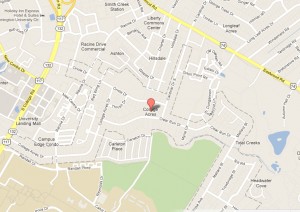
The third and last neighborhood-based meeting on the Wilmington Collector Street Program will take place Thursday night with a focus on the College Acres and Hillsdale communities that spread College and Eastwood roads.
The meeting is set for 6 p.m. in the training room of the New Hanover County Government Center, 230 Government Center Drive.
Collector streets are roads with two or three lanes and bike paths linking neighborhood streets to major roads, according to the Wilmington Metropolitan Planning Organization (WMPO), which on Thursday will provide specifics for College Acres and Hillsdale residents. Staffers will also accept comments and questions.
“Collector streets form the connective tissue in Wilmington’s street network,” the existing plan’s executive summary begins (click here to view the plan in full). “Collector streets serve a dual purpose, to provide access and to link trips to the wider network of streets which connect with highways.”
Additionally, “Collector streets frequently have houses and non-residential properties connecting directly with them.”
While planners believe the concept benefits residents through reduced congestion on major roadways and better avenues for ambulances and fire trucks, recent neighborhood meetings that focused on the respective Glen Meade and Sunset Park areas raised criticism.
Comments about cut-through traffic, safety, noise and impact to community character are compiled in the draft plan’s update. “I think the integrity of our neighborhood would be tremendously diminished as well as an increase in crime,” one of them contended, adding, “I think this ‘Collector’ Street fad is some idealistic academic dream that in reality will be a disaster.”
WMPO’s plan says objections to slated collector streets most often come from nearby residents or property owners. “Most of these concerns relate directly to the volume or speed of the automobile traffic using the street.”
But, the plan notes, “the benefits of collector streets to the local community generally outweigh the perceived impositions created by the relatively low volumes, typically no more than 1,000-5,000 cars each day on a residential collector. Without a good collector street system, neighborhoods would tie into major arterials directly, exposing people to far greater traffic volumes and increased travel time.”
The plan adds that during less congested parts of the day, the interconnected streets would “offer local residents a choice of routes that avoid intersections with traffic signals, so as to avoid frustrating delays.”
But it does acknowledge potential negatives. “People in existing residential neighborhoods may perceive that even low traffic volumes could negatively impact one or more aspects of their quality of life, with declines in property values and personal safety being two common concerns. At such low volumes, any negative impact on property values from the proximity to the roadway is small or inconsequential.”
College Acres, the larger of the two communities in focus Thursday, includes College Acres Drive, Oriole Drive, Clear Run Drive and South Cardinal Drive, among others immediately north of the UNCW campus off South College Road. The Hillsdale area, just north of College Acres, includes Pine Clay Road, Charter Drive and other short neighborhood streets near or off of the busy Eastwood Road.
“The meeting will also include neighborhood input received about the plan, what changes were made as a result, what did not change and the reasoning behind those decisions,” the announcement states.
Contact Ben Brown at [email protected] or (910) 772-6335. On Twitter: @benbrownmedia
