


[Ed. note: The piece was updated after press to include the city’s vote and feedback on Tuesday evening.]
NEW HANOVER COUNTY — The New Hanover County commissioners cast the first vote in a joint initiative to fund Corning’s expansion into Wilmington in the next five years. The county agreed to put in $3 million through 2031, in exchange for 414 jobs and an increase to the tax rolls on the company’s $535-million investment. The city council took up the matter for an additional $2 million for Corning, making the total performance-based incentive $5 million.
Corning is one of the largest taxpayers and employers in the county, Chief Financial Officer Eric Credle told commissioners Monday. The five-member board voted unanimously to invest $600,000 annually in the next five years. Council fulfilled its portion Tuesday night to pay out $400,000 annually in the same time frame.
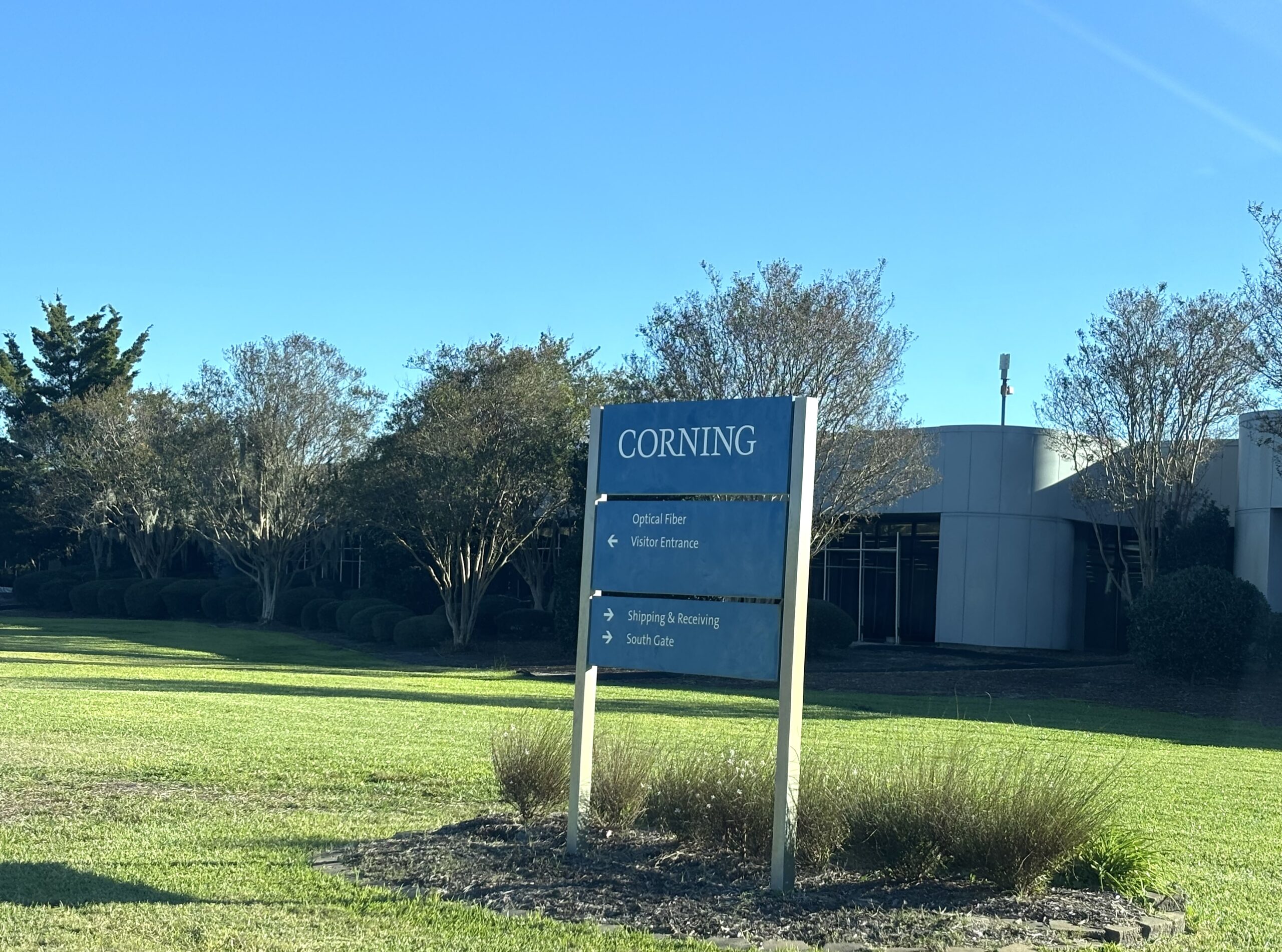
The expansion of manufacturing capacity will include a $535-million capital investment of property, building and equipment. Corning’s 66-acre campus is located on South College Road and has been a part of the Wilmington business community since 1966.
READ MORE: $5M incentive: City, county tapped for joint investment on manufacturing expansion
There are an estimated 1,000 people working there currently. Though globally, that number balloons 65 times over with Corning’s 144 locations in 46 countries, including 78 manufacturing facilities and 17 global labs, spanning from the U.S. to India.
“Having companies like this and rewarding them as existing industries that continue to provide and do well is to our best benefit,” CEO Scott Satterfield of Wilmington Business Development told commissioners.
Wilmington Business Development has been working to bring this project to life for a “significant” amount of time, Satterfield confirmed.
He called Corning “key existing industry,” as the company — headquartered in Corning, New York — specializes in glass, ceramics and advanced fiber optics. Its division of the optical communications sector is leading the Wilmington expansion.
“Corning manufactures fiber, cable and connectivity solutions that enable the fast, reliable transmission of large volumes of data across a variety of telecommunication networks,” Satterfield explained.
Satterfield estimated construction on the expansion would break ground by 2028 and said Corning is prioritizing the use of local construction companies and support services.
Part of WBD’s goal as a nonprofit and partner to area governments is to help foster deals and persuade companies into the region. Most recently, the nonprofit ushered in the facilitation of the Amazon robotics and fulfillment center in the region, also set to employ 1,000 people and bring around $163 million in recurring annual economic activity.
Commissioner Bill Rivenbark explained Wilmington Business Development evolved from a different organization, Wilmington Industrial Development — Committee of 100, 60 years ago. He gave credit to the Cameron family, who originated the group after the Atlantic Coastline railroad industry left for Florida in the mid-20th century.
“Nobody had a job in Wilmington NC because it was dead,” Rivenbark said. “The Camerons went out and brought GE and Corning here and they saved our bacon.”
Credle told commissioners the jobs the facility will bring with the expansion includes salaries 21% higher than the area average — to be roughly $41 an hour. This breaks down to support engineers averaging $132,000, salaried engineers at $119,000 and around 339 production and maintenance employees at $77,000.
Commissioner Rob Zapple asked if the jobs would be targeting locals, which also came up at the city council meeting Tuesday by council member Cassidy Santaguida and Mayor Pro Tem Kevin Spears. They wanted to ensure local talent would be secured.
“It’s easier for them to pull their labor pool from this area,” Satterfield assured, noting while they can’t mandate them to hire locally, a suggestion is there to make a “reasonable effort.”
He added Wilmington Business Development is working with the Cape Fear Community College for job training in these industries.
Commissioner Stephanie Walker said gaining a stronger local job force employed by higher-paying salaries was a needed benefit she appreciated, while her colleague, Chair LeAnn Pierce, promoted this kind of investment as one the county should prioritize to create better opportunities for its citizens.
Mayor Pro Tem Spears echoed the sentiment at the city council meeting.
“We do want to invest in this area holistically and understand there are also people here who have barriers,” Spears said, adding he was excited about the opportunity for the community.
He asked to be on the board that ensures the company is meeting all of its criteria.
Wilmington city council member Salette Andrews wanted to know more about the formula city staff would use to ensure metrics were met; she asked how they would measure jobs, wages and performances, as well as verify retention, distinguish replacement hires and transfers.
Wilmington Chief of Staff Dennis LaCaria said city staff are weighting the jobs more than investment in facilities.
“We believe that’s really what matters, is getting people connected to opportunity,” LaCaria said. “So if a company had to have 10 hires to get 100 and they only did eight, they would get 80. I’m grossly oversimplifying.”
LaCaria added the city and county will independently assess data points shared with them and then certify it together to confer everyone’s information matches when it comes to meeting the incentive agreement.
The company broke down annual jobs and investments it would bring between 2027 and 2031:
2027: 16 jobs, $50.5 million investment
2028: 55 jobs, $201.5 million investment
2029: 195 jobs, $165.6-million investment
2030: 150 jobs, $66-million investment
2031: Zero jobs, $101.5-million investment
According to the county’s financial officer, Credle, the $585-million investment is the largest incentive deal the county has been a part of to date. It came in seven times higher than an $82-million investment to bring the Wilmington Trade Center to the area. New Hanover County put in a little more than $3 million in WTC’s performance-based incentive.
“The county tax-paying funds are reasonable and prudent,” Credle told commissioners by comparison to Corning’s request.
He anticipates the county will be cash-flow positive by year three, with the property tax revenue exceeding the county’s investment by year four.
Credle noted recapture provisions were added to the agreement, too, meaning the county won’t be giving money if abandonment of the site or workforce reductions take place.
NHC Board of Commissioners Vice Chair Dane Scalise also asked about the industry’s multiplier effect. Essentially, he wanted to know if the Corning deal would help bring other industries to the area.
Satterfield gave Corning credit for playing a role in persuading Amazon’s 3.2-million-square-foot facility in the Pender Commerce Park. Corning has contracts with Amazon, Nvidia (which contracts with Verizon), Meta, and Microsoft.
“Their presence helps establish the greater region as a serious contender for major global opportunities,” Satterfield said.
Commissioner Zapple homed in on the fact the company could have pursued any other locality worldwide. Satterfield confirmed Corning had considered South Carolina, Texas, India and China.
Scalise expressed gratitude for the local roots but also wanted to consider the cost benefit: “We are stewards of public dollars and want to make sure we are getting a return on investment.”
Only one person signed up to speak at the commissioners’ public hearing Monday. Wilmington Chamber of Commerce CEO Natalie English yelled “ditto” from the audience after hearing several praises of what Corning could bring to the area.
At the city council’s hearing Tuesday, Megan Mullins, whose husband works at Corning, was in attendance. Mullins is the chief communications officer for the Wilmington Chamber of Commerce.
“Wilmington is competing with other regions and states for this kind of investment,” she said. “We should want to be competitive if we want to keep attracting good jobs and expanding our tax base.”
Mullins also praised Corning for being helpful in the chamber’s Career Leadership Academy, which works with seventh through 10th grade students. The company participates in talking with students about jobs in engineering and manufacturing.
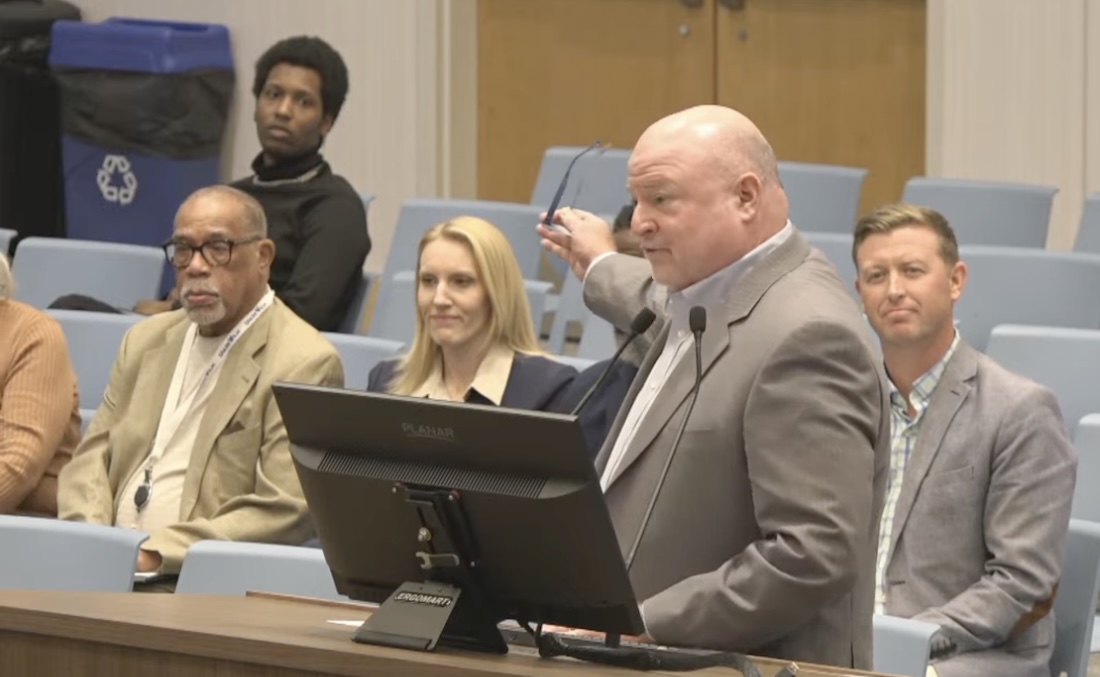
At the city council meeting, Satterfield introduced numerous Corning executives in the audience.
“It’s a lot easier to help grow an existing company then go out and bring in a new one,” he said.
According to Wilmington Business Development, Corning’s expansion will produce a payroll impact of more than $35 million per year for the Wilmington area.
At Port City Daily, we aim to keep locals informed on top-of-mind news facing the tri-county region. To support our work and help us reach more people in 2026, please, consider helping one of two ways: Subscribe here or make a one-time contribution here.
We appreciate your ongoing support.
