


SOUTHPORT — Since the Southport-Ft. Fisher ferry went offline just after New Year’s, several small business owners along South Howe Street say the reduced foot traffic is bruising their off-season.
Though winter slowdowns in the tourist town are to be expected, business is normally buoyed by day-trippers. With fewer Wilmington-area and Pleasure Island visitors, many Southport small businesses are feeling just how much their patronage matters.
Related: Alcove Beer Garden newest addition to Cargo District’s incubator hub the ‘Outpost’
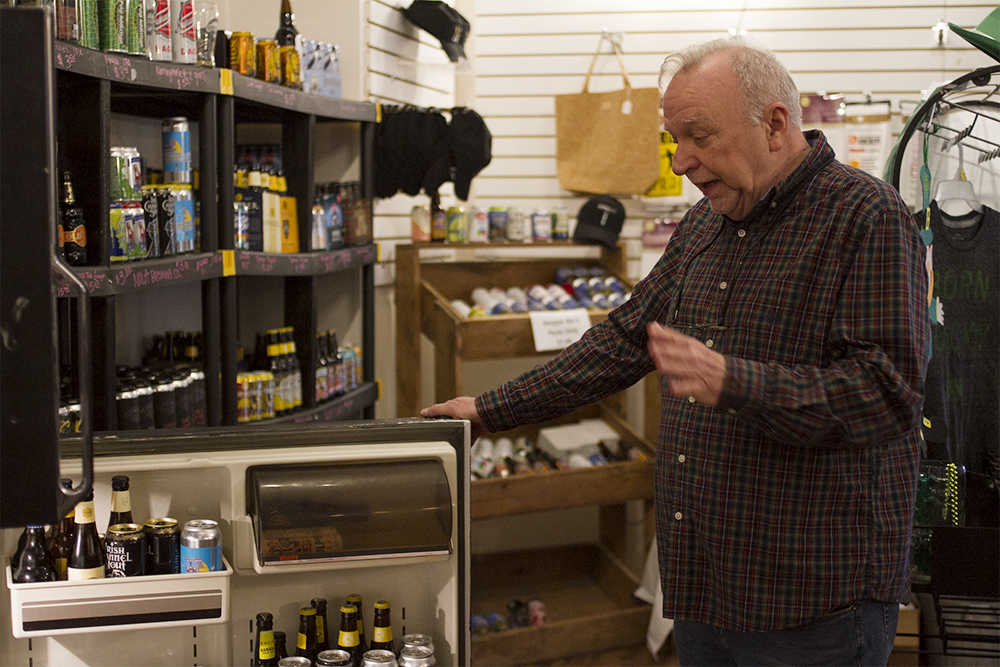
“Southport is under a naval blockade by the state of North Carolina. It’s like Ft. Fisher all over again,” David Thorp, owner of Silver Coast Winery Tasting and Taproom, joked. “I’ve been saying that all around town.”
Looking at numbers from this time last year, Thorp said business is down 30%. Like fellow business owners next door, he attributes this to the ferry being closed down.
“There’s empty streets,” he said. To beat the blues, eight small business owners banned together to create the city’s first St. Patrick’s Day block party.
Three months offline
The Southport-Ft. Fisher ferry route is one of four tourist routes maintained by the North Carolina Department of Transportation (NCDOT); the three other routes serve Ocracoke Island.
The state’s ferry system is designed to stimulate economic activity. An operation largely subsidized by taxpayers, the ferry system recouped just 6% of total expenditures from fares in 2015-2016 (costing $10.4 million a year, the Hatteras-Ocracoke route, which charges no fare, brings down this rate for the whole system). In 2012-2013, North Carolina’s ferry system had the second-lowest recoupment rate in North America, behind only Staten Island Ferries, which charges no fare.
In 2017, the General Assembly’s Program Evaluation Division came up with an efficiency report and recommendations for the system to increase fares and reduce the number of lower-use crossings. Increased fares, like the increase from $5 to $7 per vehicle 20 ft. long or shorter, went into effect in August 2018 at the Southport-Ft. Fisher route.
With the rate change, the Ft. Fisher-Southport ferry generates an estimated $1.5 million in revenue a year. With a total operating cost of $3.3 million (not including this year’s repairs and maintenance project), this route could be recouping as much as 45% of its expenses.
On Aug. 7, the ramp system on the Southport side failed. Crews made emergency repairs as the ferry remained closed through Labor Day weekend. Mid-December, NCODOT announced it would close the ramp between January and April 6. A new hydraulic ramp system will replace the aging cable-counterweight ramps at both terminals, costing NCDOT $3 million.
Tim Hass, a spokesperson for the NCDOT ferry division, said the replacements are still are on schedule. “However, there is still a month of critical work that will need to be completed in order to ensure the April 6 opening,” Hass wrote in an email.
Compared to zero passengers this year, the route carried 17,528 passengers in January 2019, 18,151 in February 2019, and 31,643 in March 2019, according to Hass.

New Hanover boost
The shutdown appears to have negatively impacted business in Southport more than Pleasure Island.
Greg Reynolds, president of the Pleasure Island Chamber of Commerce, said he’s heard very little about the ferry’s impact. “It’s more of an inconvenience more than anything else,” he said.
As the southernmost business in New Hanover County, the North Carolina Aquarium at Fort Fisher can’t attribute any reduced numbers to the ferry, Robin Nalepa, spokesperson for the aquarium said. Because its conservatory is closed down for repairs and it’s the off-season, Nalepa said the aquarium is not operating at its baseline for now.
Across the river, Southport-Oak Island Area Chamber of Commerce vice president Karen Spahr said downtown Southport businesses feel the closure the most.
“It’s been a really great feeder market for both of us,” Spahr said of the ferry. “And it’s an arm that’s kind of been — put behind your back for a little bit. When it comes back it’s going to be fantastic.”
When Oak Island’s eastern bridge closed for eight months between 2018-2019, Spahr and the chamber launched a “worth the drive” campaign. NCDOT’s closure caused a slowdown on the island, but Spahr said the messaging helped drill down the point to residents in the region, “Hey, we’re still here,” she said. The chamber hasn’t fully engaged the old campaign for the ferry closure, but Spahr said the tagline applies just the same.

‘A deep lull’
Some business owners wish the ramp replacement would have been scheduled over the summer months. It may seem counterintuitive — passenger traffic last July topped 82,000.
But Beth Commander, owner of Southport’s Trolly Stop, said since tourists are around in the summer anyway, it wouldn’t have been such a hit.
“We would already have people driving in so it wouldn’t hurt as bad. You wouldn’t notice it, really,” Commander said. “It really hurt the businesses down here this time of year. Because we’re slow anyway because it’s winter, there’s no tourists downtown.”
The shop’s general manager, Sam Roberts, said the three-month closure is yet another hit to a few tough years. Hurricane Florence in September 2018 impacted sales, then the Oak Island bridge closed a couple of months later. Sales are down 15% from last year (an abnormal year because of the bridge closure, Roberts said) and 30% from 2017, the most recent “normal” year.
Lantana’s Gallery, a 15-second walk away, relies more heavily on happenstance shoppers, as opposed to destination-based customers looking for food. Mo Meehan, the store’s owner, said she gets new customers through foot-traffic. “They just fall into the store and they love it,” she said.
“And then it becomes a destination,” Briton Campbell, a Lantana’s employee added. Making the 45-minute drive, Meehan said, isn’t as fun as sight-seeing the mouth of the Cape Fear River on your way there. “The ferry itself is the experience,” she said.
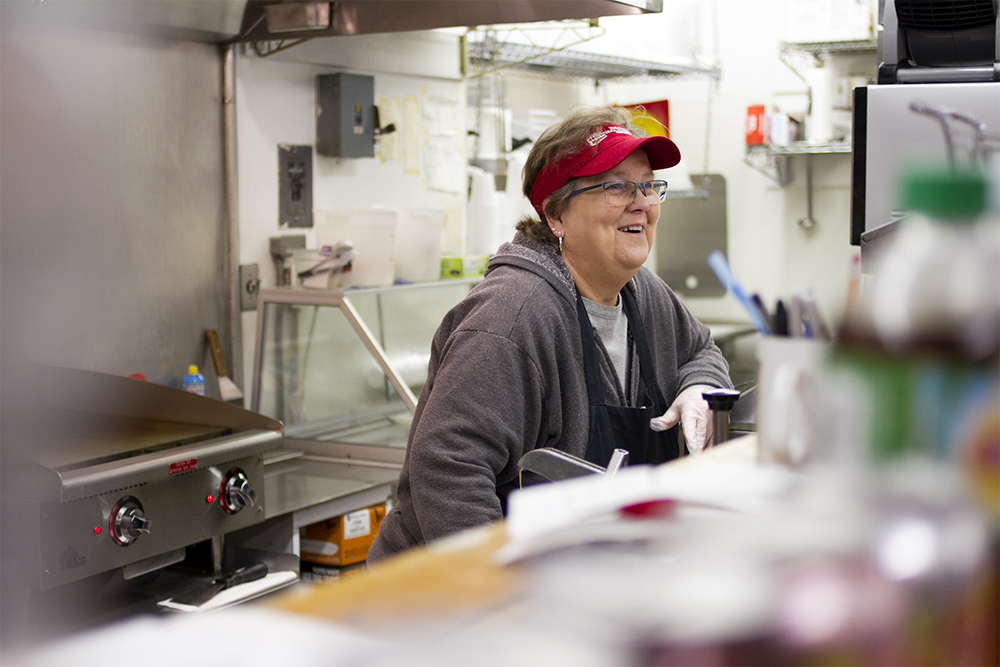
Meanwhile, a recently-opened CBD shop, The Green Lyf, is having a rough start. Presenting itself as a boutique CBD shop (and not a typical vape dive), the business opened its third location on South Howe in November, its first in the Cape Fear region.
“These guys, I don’t — I mean, we just all look at each other like, how was your day? And some days, my day was better than their days. We just stand around waiting for people to walk in,” the store’s manager, Sherri French, said. “This has been a deep lull.”
Lee Thompson, owner of Cape Fear Jewelers on Moore Street, said he’s noticed about a 10-15% slowdown, especially from Kure and Carolina Beach customers.
Commander said she asks every unfamiliar face in her shop where they’re from. After Memorial Day and New Year’s, she stopped hearing people say “Carolina Beach” or “Wilmington.”
Shamrocks on South Howe
Tired of the block’s “common misery index,” Thorp thought up the plan to host a St. Patrick’s Day-themed event. With the help of Meehan, the business owners got the entire block onboard for the city’s inaugural “Shamrocks on South Howe” event.
To prepare, French got a French manicure with sparkly green tips. Campbell bought a floor-length green dress. Thorp ordered two kegs of Edward Teach Brewery’s German Lager, dyed green.
The hope, the business owners said, is to drum up enough business to last through the shoulder month, before the ferry reopens at last.
Shamrocks on South Howe will take place Saturday, March 14, beginning at noon. There will be free giveaways every hour, on the hour, with live music on site. Costumes are encouraged.

Send tips and comments to Johanna Ferebee Still at johanna@localvoicemedia.com
