


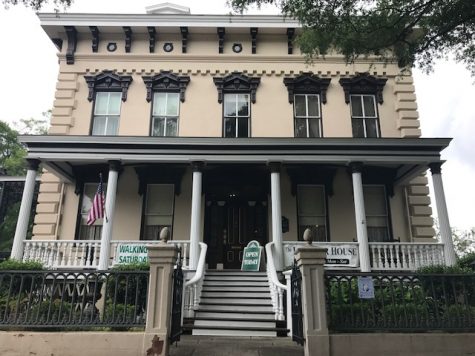
At the mention of Memorial Day, most people think about patriotism, grilling and a three-day weekend. However, according to Latimer House manager Travis Gilbert, Wilmington’s very first Memorial Day celebrations were considerably different from what we do to celebrate today. After the Civil War, southerners were still able to muster the energy to honor the fallen while carrying the burden of immense separation within the community.
The Latimer House, home to the Lower Cape Fear Historical Society, is Wilmington’s only house-turned-museum that still exhibits many of its original Victorian furnishings, making this house a pivotal site when it comes to exploring Wilmington’s cultural history.
Gilbert, whose specialty is southern women’s history, draws a connection between women and Memorial Day that isn’t as acclaimed.
After the Civil War, women were tasked with collecting and delivering, to Oakdale Cemetery, the hundreds of unidentified bodies scattered around New Hanover and surrounding counties. This communal grief after the war sparked a women’s crusade that defied what it had previously meant to be a southern lady, compared to the years leading up to the war.
“They were supposed to be apolitical. It would’ve been very unchaste of them to speak in public,” Gilbert said. “But after the war, so many of them lost their brothers and husbands, that they became the leaders in creating this Confederate Memorial Day and it was so outside their gender sphere.”
The Civil War resulted in Wilmington having two Memorial Day celebrations to honor the lives lost in the Civil War— Confederate Memorial Day, which was a grandiose event, and Federal Memorial Day, which was more subdued and celebrated among the union sympathizers and the African American community.
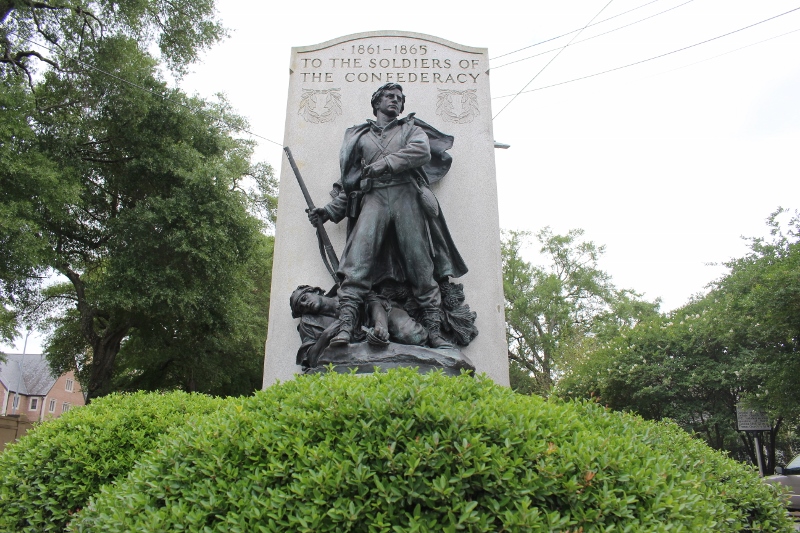
Confederate Memorial Day, May 10, was mainly organized by women. There were parades, with several organizations, that lead a march up to Oakdale Cemetery. Once at the cemetery, events included preacher invocations, notable speakers, readings, and hymnal singing. Afterwards, the families would decorate the graves with evergreens and magnolias. Aside from this grand parade, flags would be flown at half mass, ships would be decorated in black crêpe, and businesses downtown would close.
Federal Memorial Day celebrations, also known as Decoration Days, were held at the National Cemetery on Market Street, less than a mile away from Oakdale Cemetery.
“They would just meet there. They wouldn’t have this grand procession downtown. They just wouldn’t be welcome, especially after reconstruction ended,” Gilbert said. “They didn’t resettle out of the South once the war was won. It generally looked, for a time period there, that racial equality would be an outcome of the war. So, they remained in these coastal North Carolina cities because it was home for them.”
It wasn’t until the beginning of the 1900s and the coming of World War I that the north and south reconciled and agreed on a federal Memorial Day date, the last Monday in May. This agreement was a part of a bigger plan to squash the tension that resulted from the Civil War.
“When in four years, it seemed like every family had lost somebody or multiple people, no wonder they came together, black and white,” Gilbert said.
The Lower Cape Fear Historical Society will be hosting a Memorial Day Weekend Special Walking tour on May 27, from 2-3:30 p.m., at the Latimer House. For more information, visit its website.
