


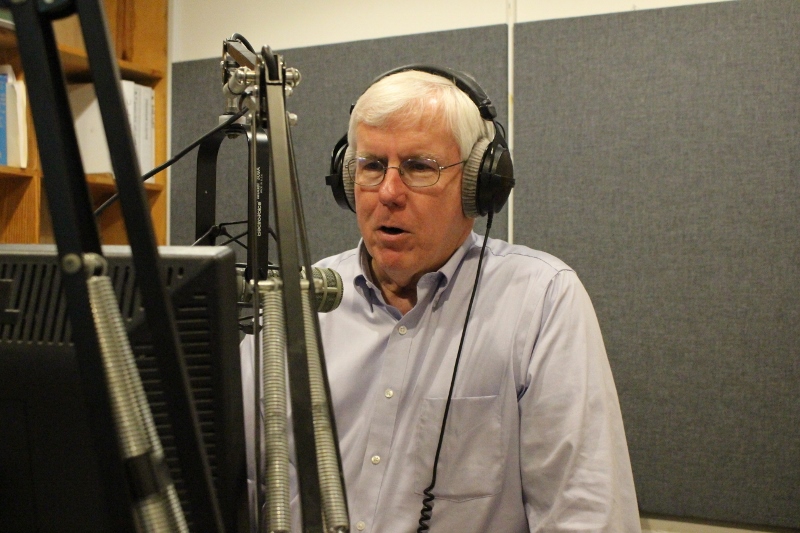
WILMINGTON — In 2010, public radio in the Port City was on the edge of collapse. The radio station was working with ancient equipment and an outdated style. It hadn’t paid its bills in two years. Something had to be done.
National Public Radio eventually demanded that the Board of Directors for WHQR hire a station manager. Cleve Callison, who took the job that year, is widely credited with saving WHQR from a fiscal apocalypse by judiciously implementing automation and scaling back staff (though he’s quick to defer the credit elsewhere). But in many ways, the station’s financial mess was his least daunting challenge.
“Well, it’s true, when I came aboard it was the financial low point, there was some question whether my role would be that of a caretaker who sort of cleaned up the building before the crew came to demolish it,” Callison said.
The building wasn’t demolished. In fact, four years later, Callison and the Board of Directors were able to stop leasing space and put the down payment on a mortgage for the studio’s space. The same year, they finally finished paying off their debts and were able to start passing annual audits and saving money.
Callison was then able to turn to the station’s crumbling infrastructure.
“Until about a year ago, We had computers running Windows 95.”
“There was a lot of really outdated equipment. Until about a year ago, we had computers running Windows 95,” Callison said.”
But the biggest struggles Callison faced weren’t financial. They had to do with how public radio was entering the 21st century.
Public radio in the social media age
“The measures that we took to turn things around financially, those were in place when I got here, I just steered them forward,” Callison said. “I became responsible for making sure we were living up to our mission, that we were broadcasting in the public service and the public interest. But that also means broadcasting content that’s appealing enough so we can keep ourselves supported.”
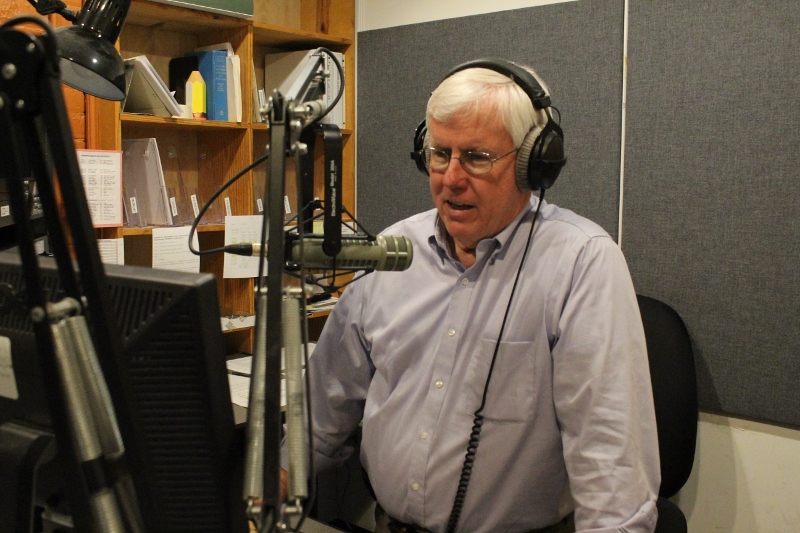
For Callison, that meant updating the station’s style, both in terms of content and delivery.
“We’re all aware of the parodies of public radio, especially on Saturday Night Live,” Callison said. “And, in the past, they were certainly accurate in a certain way. The programming was something like a series of lectures, and the tone was professorial. You’d have someone on the air saying, ‘this is the book hour,’ and then an hour on mathematics, and that doesn’t work anymore.”
Callison helped fight against an entrenched idea that public radio listeners were endlessly loyal; Callison helped bring about an understanding of how people listen to radio in the modern age.
“There’s a saying, ‘you can’t go into Radio Shack and buy a public radio,’” Callison said. “Which is to say, there isn’t public radio and then other radio, it’s just radio. And there was certainly an attitude, that was deeply entrenched, that public radio listeners only listened to public radio. But we know better. They certainly may listen to a lot of public radio – I certainly hope they do – but we’re foolish if we think they don’t listen to other channels. And we’re foolish to think they don’t use social media, or other mediums, too.”
Public radio could not – in Callison’s opinion – abandon the “deep dives,” like the weekday call-in show “Coastline.” The hour-long program tackled important issues, Callison said, and served as a necessary update to “the old practice of rereading the news” that bogged down local news broadcasts in the past.
But, to keep a modern listener – “someone used to getting their news from a tweet or a quick Facebook post” – Callison needed a way to keep long programs listenable. Part of Callison’s solution to the old-school approach to modern radio was to write in a different tone.
“I’ve heard it said, and it’s arrogant, that public radio is radio for smart people. For one I’m not quite comfortable with that, but I also think that – we do have a smart audience – but that radio, especially now, has to be different than print. We do focus on shorter sentences, on simple and clear syntax, on sentences that don’t refer back a few lines. We’re working to avoid the things that work in print but don’t on the radio.”
‘Way more Hemingway than Faulkner.’
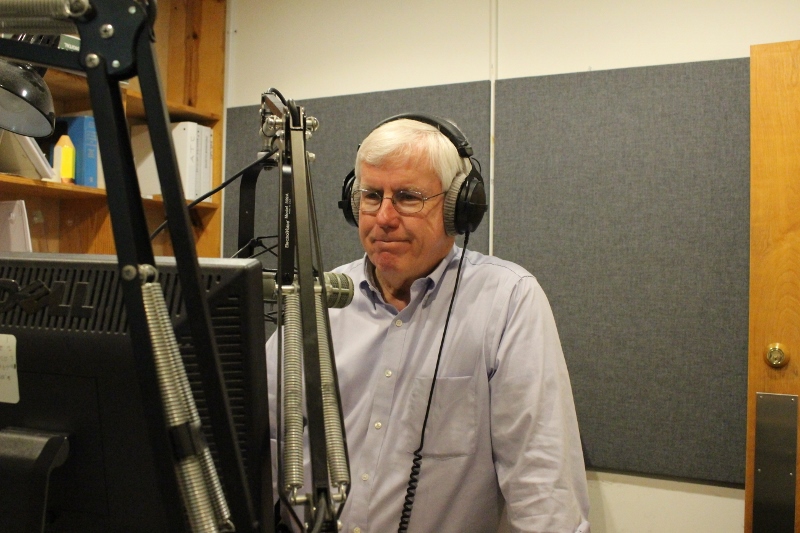
Though Callison has a Ph.D. and is well-versed in academic lingo, he’s worked hard to keep the tone at WHQR from being “stuffy or academic.”
“Way more Hemingway than Faulkner,” Callison said. “Although I’m not much a fan of Hemingway, as a reader and a southerner, I much prefer Faulkner. But, that said, in the age of social media, with such a great premium put on condensing and punchiness, if you can work in that way, you can be very successful. So maybe Hemingway was on to something, I suppose.”
When it comes to social media itself, Callison admits there’s still work to do at the station.
“We’ve been better at certain facets of digital media. Like updating our website. There was a real resistance to the idea of putting a program online before it was on the air, but if we’re going to tell people, ‘you can listen online,’ then it has to be up,” he said. “But when it comes to Facebook and social media, I admit, we haven’t quite figured out how to integrate that with the radio broadcasting. I think that will be one of our next big challenges.”
Public radio and the year of Trump
Then was one other challenge Callison faced during his tenure, something of the elephant in the room at public radio stations: the polarizing effect of the 2016 election on people’s view of public radio. During Callison’s weekly installment – “Feedback Friday” – he reads critiques and complaints (and the occasional compliment) from listeners. For years, Callison has fielded programming gripes and technical issues, but this year was different.
“I’ve always read the critiques because they are sometimes useful and it would be terribly boring to hear me read people patting us on the back. People do get quite upset if the classical transmitter doesn’t reach them. They either love or hate ‘Car Guys,’ they love or hate the new ‘Prairie Home Companion.’ So it’s not that we didn’t get more letters and complaints. But we got much, much angrier complaints. I think that had to do with the passions unleashed by Trump’s campaign, and how polarizing it was to almost everything.”
Many of these angrier complaints threatened to stop donating – and listening – to public radio because it had become too liberal.
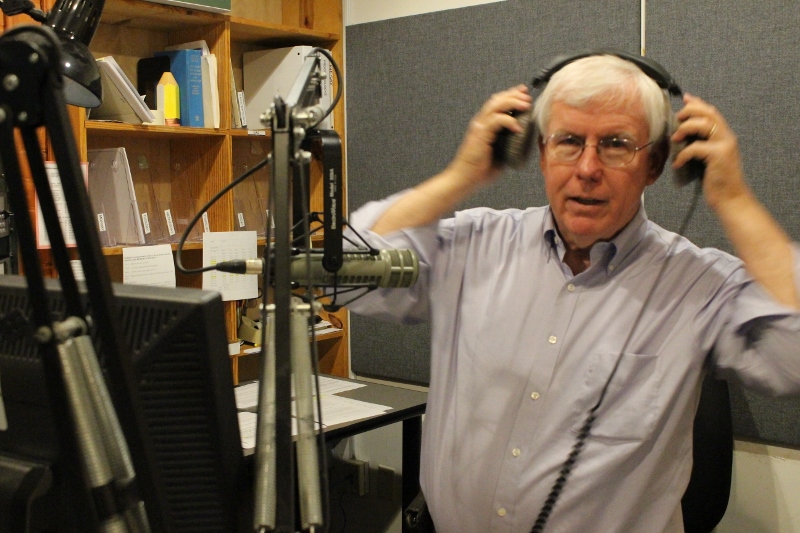
“It was something new. It doesn’t feel to me like we are a liberal bastion or cheerleader or any such thing. We’ve been very, very careful to maintain relationships with both political sides,” Callison said.
“On our daily talk show, we are very careful to be balanced,” he added. “Sometimes we’ll do a show that has only one voice, but in that case it is something that isn’t partisan, like how hurricanes form or something – well, Pat Robertson seems to think he can get God to send hurricanes where he wants them, but I think that’s an extreme case – let me say that we’ve worked very hard to be evenhanded.”
The end of the Callison era
Callison is set to retire in August, leaving the board of directors to reflect on what could fairly be called the “Callison Era” at WHQR. The board will launch a nationwide search for a candidate to fill Callison’s shoes. It is safe to say it will not be a small job.
Though the station’s finances are stabilized, the next station manager will still have to continue to tackle things Callison did best: keep public radio relevant as the attitudes and expectations of listeners change radically from those of the past decade, and the past century.
“I like to think I’ve given everyone the tools to do good work,” Callison said. “I’m for one looking forward to teaching, to reading, and, yes, to letting someone else worry about all the little things.”
Reporter Benjamin Schachtman can be reached at [email protected], @pcdben on twitter, and (910) 538-2001.
