


Homeowners or renters who have a garage to park in know how much joy it can bring. A garage brings the promise of a warm, safe space to park your vehicle. No matter where you live, a garage can protect your vehicles from the elements. A garage means extra storage, too — a safe space for any memorabilia or holiday decorations. This extra room is worth a great deal to anyone who has one.
It also means, though, that you are now the proud owner of a very large piece of machinery — the garage door. If your garage has an overhead door, as most do, it runs on an intricate combination of springs, cables, tracks, and more. Simply installing a garage door is not enough to ensure you enjoy the benefits of your garage. An overhead door needs maintenance, pure and simple. Some things are very easy to do on your own, while other garage door maintenance tasks should only be carried out by a professional. Here’s how to keep your garage door moving in seven easy steps.
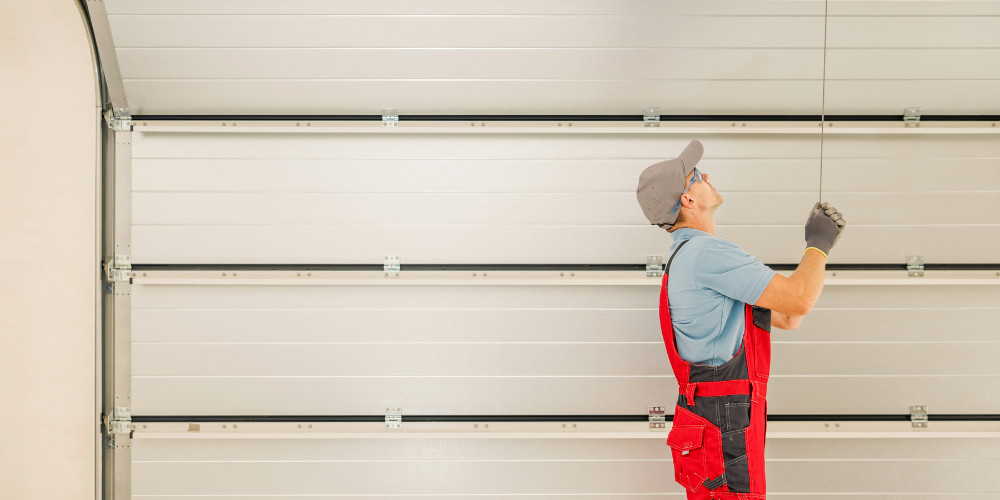
7 Tips to Keep Your Garage Door Moving
1. Schedule an Annual Inspection
Just like your car, your overhead door needs to be inspected once a year for safety’s sake. Don’t skimp on this! The last thing you need is a door that malfunctions, trapping you or your car inside or, worse, crashing down at the wrong moment. A garage door technician should come by and inspect your door carefully every year. This person will also lubricate your door to make sure it’s running smoothly and minimizing wear and tear on parts. It’s best not to do this on your own with WD-40 or similar; the technicians use a lubricant that’s specific to these parts and works best for your door. Never try to lubricate the tracks, as you might cause damage to the system.

2. Test Your Garage Door’s Features
Your door is equipped with a feature called safety reversing. Essentially, this means the door will automatically stop and go back up if it encounters an obstruction. This is definitely something you want to test once a month. Checking that the sensors are properly situated and aligned is easy enough to do, and you can find a YouTube tutorial to walk you through the steps. If the sensors aren’t working, you may want to call a technician to take a look at the system before the overhead door comes down on something valuable — like your vehicle.
3. Learn How to Open Your Overhead Door Manually
The last thing you want is to be rushing to work when you realize your garage door has conked out and you’re trapped in your garage. Sure, you can call an IDEA certified technician to fix things, but that doesn’t get you to work on time. This is why you should always know how to open your overhead garage door manually as well. Manual opening techniques differ slightly from one garage door to another, but are all generally easy to manage. If your garage isn’t responding, it’s also a good idea to check that it’s receiving electricity. Check both the circuit breaker and GFI to be sure. It’s always better to be prepared for any situation.
4. Is Your Door Balanced?
Now that you know how to open your garage door when the operator isn’t receiving electricity, you can also check if your door is balanced. How so? Simple. First, make sure the operator isn’t connected by examining and shutting off the circuit breaker. This YouTube tutorial walks you through that part. Then, manually raise the door halfway. If the door is balanced, it’ll maintain this height without drifting down or floating up. If you’ve taken all these steps and see your door drifting, contact a technician. This is one issue that’s dangerous to fix without the proper tools and training.

5. Check If Your Cables Are Fraying
If the cables that move your garage door are fraying at all, you want to know about it sooner rather than later. Garage door installation includes putting in state-of-the-art cables, of course, but time and usage impact them just like anything else. You don’t need to be too worried about this. Just make sure you take a good look at your cables once a year. If you notice anything out of the ordinary, call a technician to replace them. Even though you can get garage door cables at a hardware store, this is a delicate task with a lot riding on it. For your safety and the security of your home, best to call in the pros.
6. Leave the Corner Bracket Alone
Whatever you do, don’t touch that corner bracket. Those brackets hold together the whole system, from the bottom rollers and the ends of the cable to the torsion springs. If you remove the bracket the whole garage door may come crashing down. It’s very dangerous to attempt and may cause major damage to the door system or even injure someone in the process. Even if you believe your garage door repair problems originate from the corner bracket, leave that one to a certified technician.
7. Call an IDEA Certified Technician
At the end of the day, there are a few things you should always call a technician to take care of. For example, if your operator only opens the door a few inches or seems to be struggling, you can visually inspect the counterbalance springs to see if they’re broken. But if you see that the spring is broken or compromised, contact a trained technician for the proper replacement parts. If your safety sensors have been knocked out of alignment, you may have trouble checking that on your own. While this specific issue is not usually covered by warranty, it’s still worthwhile having a professional check to make sure all safety systems are on the up and up.
Local professionals, like the IDEA certified technicians at Crawford Door Systems, Inc, are well-trained in everything from garage door installation to any repairs or other maintenance tasks. If you have a question about anything from transmitters or keyless entry devices to myQ Cameras or custom door installation, get in touch today at 1-910-791-4389.

Sponsored Content by

