

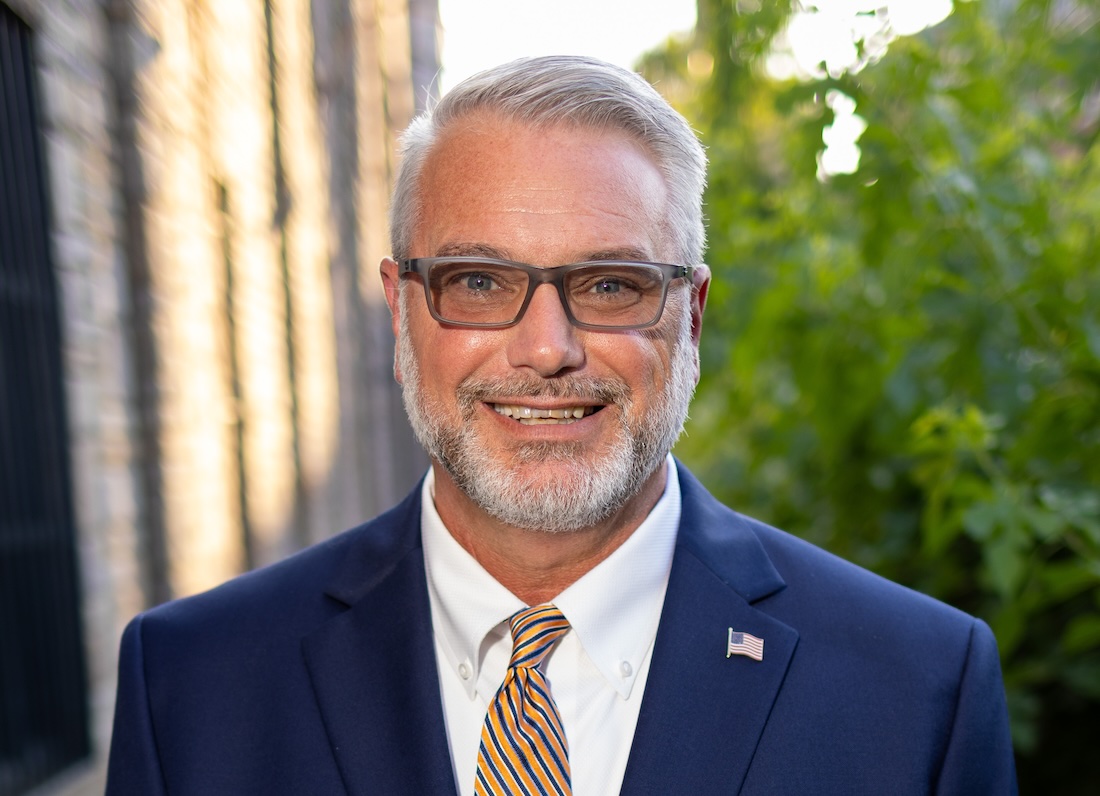
Richard Collier, Republican challenger
New Hanover County Commissioner
Career: Civil engineer
Education: AAS Architecture Civil Engineering, NCSU
Q: Why are you seeking a seat on the NHC Board of Commissioners and what is your top campaign priority; why?
A: I’m seeking a seat on the New Hanover County Board of Commissioners because the decisions we make today will shape whether our children and grandchildren can afford to live here and enjoy the quality of life we value. I’ve lived in this community since 1997, raised my family here, and spent more than 30 years as a civil engineer helping plan and build projects across our region. I want to put that experience to work for the people of New Hanover County.
My top priority is planning for growth before it strains the infrastructure and services residents depend on. That means looking at roads, schools, drainage, utilities, and public safety capacity as we make decisions about the county’s future. When we wait until those systems are overwhelmed, taxpayers bear the cost and families feel the impact in their daily lives.
Growth can bring opportunity. My goal is to make practical, responsible decisions that protect affordability, respect taxpayers, and preserve the coastal community we call home.
Q: What is the biggest challenge facing New Hanover County currently and what steps will you take to help correct it?
A: The biggest challenge facing New Hanover County is that the cost of living is rising while our roads, schools, drainage systems, and public services struggle to keep pace with growth. Families feel it in their housing costs and daily commutes. Taxpayers feel it when we delay needed investments and the bill grows larger.
As a commissioner, I would push for a clear, public picture of where infrastructure and services are already strained and what new growth will require. I would use that information to set priorities in the county budget, coordinate earlier with municipalities, schools, and utility providers, and ask how major decisions affect both service capacity and long-term costs.
I’ve spent more than 30 years as a civil engineer working through these kinds of planning challenges. There is no single vote that will fix affordability or congestion. But we can make better decisions now, explain the tradeoffs honestly, and plan ahead so New Hanover County remains a place where people can build a life.
Q: Controversy over citizen surveillance and Flock cameras have become a topic of concern for many in recent months. Do you support the current board’s decision to cancel the ALPR contract; why/why not? Would you consider renegotiating a contract for automated license plate readers, AI-based or otherwise, in the future?
A: Yes. I support the board’s decision to cancel the Flock camera contract. The sheriff’s office needs effective tools to investigate serious crime, but a system that records the movements of ordinary residents requires clear public rules and accountability. Residents deserve to know who can search the data, why they can search it, how long it is kept, and whether it can be shared outside the county. Those questions should be answered publicly before taxpayer dollars are committed.
I would consider a future proposal for automated license plate readers, including one that uses AI, but I would not approve it simply because the technology is available. The sheriff’s office would need to show documented public safety benefits, explain the full cost, and present enforceable limits on access, retention, sharing, and misuse. I would also want independent audits and a public review and comment before any vote.
Supporting law enforcement and protecting residents’ privacy are both responsibilities of county government. Any future contract must earn the public’s trust.
Q: Public transportation has been at the forefront of discussion as of late, particularly when it comes to a lack of amenities — benches, shelters — at roughly 300 bus stops. Do you support more funding for public transportation to address these issues or to increase the system’s capacity? How do you see public transportation evolving with our growing county needs?
A: Yes, I support targeted funding to make public transportation safer and more useful. If someone relies on transit to get to work, a medical appointment, or the grocery store, a safe place to wait matters. I would work with WAVE Transit to identify stops with the highest ridership and greatest accessibility needs, then add benches, shelters, and safe pedestrian access in phases. Residents should be able to see which stops are next on the improvement plan and what the improvements will cost.
We also need to consider service across the county. WAVE’s regular bus routes are concentrated around the city of Wilmington, while RideMICRO serves parts of northern and southern New Hanover County and connects riders to the bus network. Before adding routes or vehicles, I would ask where residents have the greatest difficulty getting to jobs, healthcare, and essential services. Then we can determine whether more frequent buses, longer hours, better connections, or expanded RideMICRO service would make the biggest difference.
As New Hanover County grows, transit must evolve with where people live and work. I would support additional funding when WAVE can show a clear need, a practical plan, and measurable results. My goal is a reliable system that connects residents throughout the county to jobs, healthcare, and essential services while making each taxpayer dollar count.
Q: Recent rainstorms have brought flooding concerns back to the forefront of discussion. What specific stormwater or land use strategies would you advance if elected to address flooding and/or support the overall environmental concerns facing the county?
A: Flooding is one of the clearest examples of a principle I believe strongly: Growth cannot manage itself. Every new road, roof, and parking lot changes how rainwater moves. If we consider each project in isolation and leave drainage problems for later, residents downstream can pay the price. Responsible growth requires us to plan for those effects before we build.
As a civil engineer, I would bring that approach to three priorities. First, I would strengthen the county’s stormwater maintenance program by identifying recurring trouble spots, inspecting ditches and pipes, and publishing a prioritized list of repairs and their costs. Second, for development in the unincorporated county, I would insist on drainage plans that account for downstream impacts, protect natural drainage paths, and provide for long-term maintenance of stormwater facilities. Third, I would use land-use planning to steer the most intensive development away from areas most vulnerable to flooding and preserve wetlands, floodplains, and open space where they help absorb water.
Flooding crosses city and county lines, so I would coordinate projects with Wilmington, the beach towns, and other partners. We cannot prevent every flood. But growth cannot manage itself, and county government has a responsibility to address known problems, plan for future development, and show residents the progress we are making.
Q: The deadline for the Cape Fear Memorial Bridge grant is approaching. WMPO Director Mike Kozlosky has been clear the only options to fund a new bridge at this point is the toll or the local options sales tax — which do you support? Additionally, do you support the 65-foot, the 135-foot bridge option, or do you think a third design option should be explored?
A: I oppose tolling the Cape Fear Memorial Bridge. I opposed it last year and my position has not changed. But we must be honest about the funding gap and the approaching decision. If the practical choice is between a toll and a local option sales tax, I would support putting a clearly defined regional sales-tax proposal before voters. They should know how much it would raise the sales tax, which projects it would fund, and when it would end.
I would also keep pressing for state construction funding and additional federal support, with county, city, and regional leaders speaking with one voice in Raleigh and Washington, D.C. The replacement of the Cape Fear Memorial Bridge is a regional issue.
On the design, I favor the 65-foot movable bridge, which can rise to provide 135 feet of clearance for marine traffic. It would continue the bridge’s connection to Third Street, as it does today. That matters because the proposed 135-foot fixed bridge would extend its approaches farther into Wilmington and shift the main downtown connection toward Fifth Avenue.
The movable option would also have less impact on the Eagles Island wetlands and a smaller effect on nearby homes and businesses. Those are real consequences for property owners and for our environment, and they belong in the decision alongside traffic performance and cost.
I would consider a third design if engineers could show that it meets navigation and transportation requirements, reduces impacts, and can be evaluated without jeopardizing the state and federal funds. Or I would consider a third design if engineers could show that it meets navigation and transportation requirements, reduces impacts, and can be evaluated without jeopardizing the state and federal funds or delaying the project. With the deadline approaching, we must make a decision.
This bridge matters to daily commuters, freight, our workforce, and hurricane evacuation. Losing that grant is not an option — and neither is quietly settling for a toll.
Q: Do you think the current tax rate is providing sufficient funding for county services? If you want to see the tax rate, go up or down, where would you take funding from or direct funding to?
A: The county has maintained a property tax rate of 30.6 cents per $100 of assessed value for this budget year while funding schools, public safety, and other services. I would start by working to make that rate sufficient. Families are already managing rising costs for daily needs, and I would not propose a tax increase without a clear, documented need.
My long-term goal is to expand the tax base, not the tax rate. That means encouraging businesses and employment opportunities that add value to the county while making sure growth pays attention to the roads, schools, drainage, and public safety services it requires. A larger tax base only helps taxpayers if we understand and plan for those costs.
I would also review county spending program by program, measure results, and look for duplication, underused facilities, and projects that can be delayed or scaled to a realistic need. My funding priorities would be schools and school facilities, first responders, stormwater and flood prevention, and infrastructure needed to serve a growing county.
Holding the rate steady is only responsible if we can sustain essential services. If a thorough public budget review showed a funding gap, I would explain the options and their effect on taxpayers before considering a rate increase. I would support a lower rate only if it would not weaken services or shift costs into future years. Taxpayers deserve dependable services, economic opportunity, and discipline with every dollar.
Q: A school bond is on the ballot this year, though it won’t cover all the capital needs of the district. Do you support providing more capital funds for local schools; can you explain?
A: Yes, I support the school bond. Safe, sound school facilities are a core county responsibility. I support providing additional capital funding for New Hanover County schools when the projects address documented needs and come with clear costs and schedules. Safe, well-maintained buildings are a basic responsibility, and waiting until a roof, HVAC system, or classroom becomes unusable often costs taxpayers more.
I support the $320.5-million school bond on this year’s ballot. It would fund major school construction and renovation projects, added classroom capacity, safety improvements, and building upgrades across the district. The New Hanover Community Endowment has committed up to $116 million toward the county’s school capital effort, which substantially reduces the estimated tax increase needed to repay the bonds. The county estimates an increase of one-half cent per $100 of assessed value if voters approve the bond.
The bond will not finish every needed repair. I would work with the school board on a public, regularly updated capital plan that ranks remaining projects by safety, building condition, enrollment, and cost. We should set aside predictable funding for maintenance, seek state and other available support, and report what has been completed.
Growth cannot manage itself; as we plan new housing and infrastructure, we must also plan for new schools.
Q: Earlier this year the county established its Workforce Housing Development Fund, designed to support projects dedicating at least 20% of units to households earning between 60% and 120% of the area median income. The Proximity at Blue Clay was then granted $2 million, leaving $2 million available in the fund. Do you support this fund, and if so, how would you like to see money allocated to the fund and projects chosen for support? Do you support the county establishing any other housing initiatives, and if so, what?
A: Yes, I support the Workforce Housing Development Fund as a carefully managed way to help people who work in New Hanover County afford to live here. The Blue Clay award is structured as a loan that the developer must repay with interest. That approach gives the county an opportunity to recover its investment and use the principal again for future housing.
I would keep the remaining $2 million available through an open, competitive process. Projects should be judged on how many homes they make affordable, the rents residents will actually pay, how long those rents will remain affordable, the amount of county funding needed per home, and whether the project is ready to be built. I would also examine access to jobs and transit, drainage and infrastructure costs, and the developer’s ability to repay the loan. Those terms and the project’s results should be public. I would consider adding money to the fund only after we see how the initial investments perform and identify a sound source of funding.
The 20% minimum is a starting point, not a target every project should stop at. I would give stronger consideration to proposals that provide more affordable homes or serve households with greater need. Beyond the fund, I support looking at reuse of existing buildings, rehabilitation of older housing, and partnerships that bring state, federal, or private dollars into the county. We should also review our land-use rules for practical ways to allow more housing choices where roads, utilities, and services can support them.
Growth cannot manage itself. Housing policy has to address affordability and the infrastructure needed to serve the people who live there.
Q: How do you think the county should handle its Revenue Stabilization Fund, the $300 million reserve fund established after the sale of New Hanover Regional Medical Center? Do you think commissioners should adopt a policy for the fund or continue making decisions as opportunities arise?
A: I believe commissioners should adopt a clear public policy for how the Revenue Stabilization Fund can be used. The roughly $300 million set aside after the hospital sale is a long-term asset belonging to the people of New Hanover County. Decisions about it should follow agreed-upon rules, while still allowing commissioners to consider worthwhile opportunities as they arise.
I would start with a strong presumption of protecting the principal. The policy should state when earnings may be used, what would justify using the principal, how any use of principal would be replenished, and what information must be presented before a vote.
I would favor onetime investments with a clear public benefit, measurable results, and, where possible, a return of funds to the county. The workforce housing loan is an example worth evaluating against those standards.
I would be especially cautious about using the fund to pay ongoing operating costs. A one-time draw can balance a budget for a year without solving the recurring expense. Residents should see a public report each year showing the fund’s balance, earnings, commitments, and results.
A policy should guide judgment, not replace it. If an exceptional opportunity arises, commissioners can make the case publicly and vote on it. That gives the county flexibility while protecting an asset that should benefit future generations.
At Port City Daily, we aim to keep locals informed on top-of-mind news facing the tri-county region. To support our work and help us reach more people in 2026, please, consider helping one of two ways: Subscribe here or make a one-time contribution here.
We appreciate your ongoing support.