


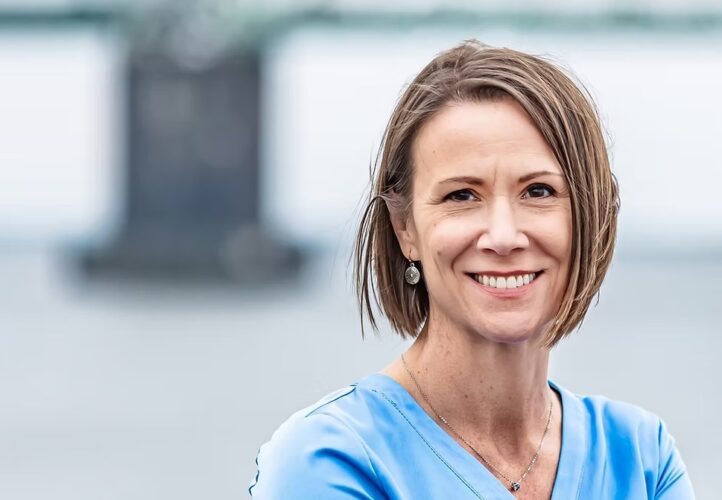
WILMINGTON — JC Lyle, a nonprofit leader and former planning commission chair, is seeking one of three seats on Wilmington City Council.
Lyle is senior director of client engagement at nonprofit real estate firm Wesley Community Development. She served on Wilmington’s Planning Commission for six years and is the former CEO of Wilmington Area Rebuilding Ministry, a nonprofit focused on rebuilding homes and assisting low-income home owners.
“I’m running because Wilmington is at a pivotal moment,” Lyle said. “Growth is bringing both opportunities and challenges, and I want to ensure our city remains livable, equitable, and beautiful. For decades I’ve worked in public service, with a focus on housing affordability, disaster recovery, and community development. I’ve served six years on Wilmington’s Planning Commission (three as chair) where I helped increase workforce housing and strengthen tree protections. I also serve on the NC Housing Partnership, which allocates millions through the state’s Housing Trust Fund. While I haven’t held elected office, I have extensive experience in governance, policy, and coalition-building that directly prepares me for city council.”
The city council is a nonpartisan race, though Lyle is affiliated with the Democratic party. She’s up against incumbents Luke Waddell ® and Clifford Barnett (D), and newcomers Richard Collier (R), Cassidy Santaguida (D), Kelly Roberts (R), and Chakema Clinton-Quintana (D). Sean Guerrero (R) will also appear on the 2025 municipal ballot, though he dropped out of the race earlier this month.
Port City Daily asked all candidates a slate of questions about topics that are tracking high with voters and residents of Wilmington currently. Lyle’s answers have been edited below for clarity.
A few things to consider this election season:
- A valid ID is required to cast ballot in North Carolina
- Election Day is Nov. 4, 2025, with voters required to go to their assigned precinct locations
- Early voting opens Oct. 16 and closes Nov. 1, and Wilmington voters can cast a ballot at any of these four sites: Northeast Library (1241 Military Cutoff Road), Carolina Beach Town Hall’s Police Training Room (1121 N. Lake Park Blvd.), Cape Fear Community College’s McLeod Building, (411 N. Front St.), and New Hanover County Senior Resource Center’s Multipurpose Room, (2222 S. College Road). See all hours of operation here where you can also track the wait times at each early voting location.
- Anyone who wants to register to vote can do so here through Oct. 10 or register and vote in one stop during early voting
The paywall has been dropped on candidate profiles to help voters make informed decisions ahead of the election. Candidate opinions and statements are not a reflection of Port City Daily.
Port City Daily: What makes you qualified for a seat on council and sets you apart from other candidates?
JC Lyle: I bring a rare combination of technical housing expertise, nonprofit leadership, and hands-on city planning experience. At WARM NC, I led an organization that preserved homeownership for thousands of families. In my current role with Wesley CDC, I help finance and build affordable housing across the region. On the planning commission, I built consensus around difficult land-use decisions.
Unlike many candidates, I have worked at every level (neighborhood, city, county, and state) turning public dollars into tangible community improvements.
PCD: Homelessness continues to be debated among area leaders; what isn’t being discussed about it, in your opinion, that you think could help better steer its direction? Do you support implementing the former joint strategy that the city and county devised in September 2024? If not, why and what strategies do you think should be implemented? How much money would you support the city dedicating to the effort?
JL: Too often, the conversation focuses only on emergency response. We must also “go upstream” to prevent people from entering homelessness; 79% of the unhoused counted last year were experiencing homelessness for the first time.
I support elements of the 2024 joint city–county strategy, but implementation must be accountable and flexible. I favor a three-part approach: stability, supply, and subsidy. That means supportive services to keep people housed, more housing supply overall, and dedicated subsidy for deeply affordable housing. Wilmington should establish a Housing Trust Fund to leverage private investment and make our housing dollars go further.
PCD: In development conversations, the supply of housing and affordability are often at odds with residents’ desire to keep density low. How would you propose tackling these issues respectively? Do you think it’s possible for the city to satisfy both desires? Why or why not?
JL: Yes, if we plan thoughtfully. The best way to add supply without overwhelming neighborhoods is to build housing near jobs, schools, and services, especially by redeveloping underused commercial sites and parking lots. That reduces traffic and protects green space. At the same time, we must uphold high design standards, protect neighborhood character, and ensure transparency so residents feel heard. It’s not about “either/or”; it’s about smart growth that balances affordability with livability.
PCD What does balancing green space with development needs look like in your view, such as when it comes to protecting wetlands or rebuilding the tree canopy? Do you have examples of cities or developments that have done this successfully?
JL: Wilmington is losing tree canopy at 1% per year. We need to change that. The Urban Forestry Master Plan gives us a roadmap — now we must invest in it. I support stronger tree protections, creative use of pocket parks, and public–private partnerships to preserve wetlands and restore canopy. Cities like Charlotte and Raleigh have integrated tree preservation into development rules while still growing rapidly; Wilmington can, too.
PCD: With the Cape Fear Memorial Bridge price tag escalating to more than $1 billion, how to fund it also remains debated. Both a toll has been floated and a transit sales tax, which would need voter approval potentially in a tri-county referendum that could include multiple projects in New Hanover, Pender and Brunswick counties. Do you support either and/or is there another option you think should be considered to fund the bridge replacement?
JL: A billion-dollar project requires creative financing. A regional transit sales tax could work if tied to a comprehensive package that improves mobility across the tri-county area, not just the bridge. I’m also open to pursuing more state/federal dollars and public–private partnerships. Wilmington’s economy depends on this bridge — we can’t kick the can down the road, but funding must be equitable. Over 50,000 cars commute into Wilmington every day. Wilmington’s population is growing by less than 2% per year; the surrounding counties are growing by double digits. We are interdependent and solutions will only result from working together.
PCD: Traffic is a main complaint for Wilmington residents — how do you envision the city’s role in addressing it? Do you think the city should promote public transportation or the expansion of it? How so? Do you think the city’s current plan to maintain and improve the roads it owns is/will be effective?
JL: The city’s role is to reduce commutes and expand options. Building housing near commercial areas shortens drive times and eases congestion. We should also prioritize bike lanes, sidewalks, and trails, making it safer to choose alternatives. Public transportation must be expanded strategically by linking neighborhoods with employment hubs and schools. Road maintenance is essential, but the long-term solution is aligning land use with transportation.
PCD: With a new police chief starting his post for the WPD this fall, what areas would you like to see him focus on to strengthen public safety and create a sustainable workforce? Explain.
JL: We must continue reducing violent crime while tackling root causes. I’d like to see emphasis on:
- Strengthening partnerships with mental health and domestic violence services, since many crimes happen outside traditional policing’s reach
- Supporting officers with adequate pay, training, and wellness resources to maintain a sustainable workforce
- Building trust with the community, especially youth, through outreach and prevention programs
PCD: As the city continues to see an influx of residents, how do you think city council should ensure Wilmington’s economy keeps pace and opportunities remain varied across all ages and types of households? What can the city do to ensure all its residents have a high enough wage to afford life in Wilmington?
JL: Wilmington must align job growth with housing supply. Employers evaluate housing when deciding to expand here, so affordability is an economic issue. We should invest in workforce development, especially in trades, healthcare, and tech. City Council can also support small businesses and entrepreneurship by streamlining permitting, fostering innovation hubs, and setting goals to contract with local businesses.
PCD: Some residents have accused the city council of only representing a select few in the community, rather than the needs of all. Do you agree with this sentiment? Explain. What would you do in a leadership position to represent more equitably?
JL: I’ve heard that concern, and it’s why I’ve spent my career listening to voices often left out and delivering tangible results in my housing policy work, volunteer service, and career preserving and creating housing affordable to seniors and working families. Equitable representation means showing up in every neighborhood, not just at City Hall. It means engaging with renters, essential workers, and marginalized communities, not just the loudest stakeholders. If elected, I will continue my practice of consensus-building,
PCD: What is one other issue not discussed above that you have a plan to address if elected and how would you do so?
JL: Environmental justice. Wilmington has endured decades of pollution in our waterways. Everyone deserves clean air and water. I will work with state and county leaders to prevent future disasters like PFAS contamination, expand recycling, and strengthen environmental enforcement. Protecting our natural environment is not only a moral responsibility but also essential to our health, economy, and quality of life.
Want to read more from PCD? Subscribe now and then sign up for our morning newsletter, Wilmington Wire, and get the headlines delivered to your inbox every morning.
