


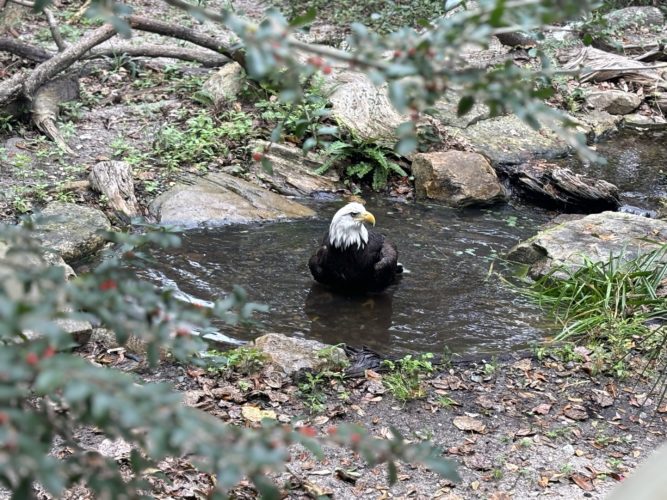
FORT FISHER — The North Carolina Aquarium at Fort Fisher is taking precautions to keep its bald eagle safe.
Maverick has been taken out of his open-air habitat as a preemptive measure in response to new cases of avian influenza found in northeastern North Carolina wild birds. This is the second time this year the eagle has been removed from his primary habitat to prevent the spread of avian flu.
“Avian influenza is a highly contagious viral disease that can affect several species of birds, including domestic poultry and wild birds,” North Carolina Aquariums chief veterinarian Emily F. Christiansen said in a press release. “This disease, if spread, could have devastating effects on poultry farms, both commercial and backyard flocks, and birds living in zoos, aquariums, and wildlife centers.”
The press release states Maverick is healthy and not showing any symptoms of the disease, which could include sneezing, coughing, lack of energy and poor appetite.
For further precautionary measures, the aquarium has increased biosecurity for staff, including restricting access to Maverick to only specific teams who work with the birds.
The aquarium staff is working with the N.C. Aquarium Division veterinary team, N.C. Department of Agriculture, and U.S. Department of Agriculture to determine when Maverick can safely return to his habitat.
No human infections from the virus have been reported in the U.S. The Centers for Disease Control and Prevention state transmission from birds to humans is very rare. The risk to the public is considered very low.
“Our visitors really treasure Maverick, a majestic ambassador for birds, and we are taking every precaution to ensure he stays safe and healthy, so he can quickly return to his habitat for everyone to enjoy,” North Carolina Aquarium at Fort Fisher director Hap Fatzinger said in the release.
The public can report sick or dying wild birds to the N.C. Wildlife Resources Commission helpline at 866-318-2401, Monday through Friday, 8 a.m. to 5 p.m. People can report any sick or dying birds in human care to a local veterinarian, the N.C. Department of Agriculture & Consumer Services Veterinary Division, 919-707-3250, or the N.C. Veterinary Diagnostic Laboratory System, 919-733-3986.
Tips or comments? Email info@localdailymedia.com.
Want to read more from PCD? Subscribe now and then sign up for our morning newsletter, Wilmington Wire, and get the headlines delivered to your inbox every morning.
