


BRUNSWICK COUNTY — At an earlier stint in a rehab program, participants worked out of an instructional guide to 12-step recovery known as the Big Book.
It included blacked-out boxes among sentences, meant to be replaced with the reader’s personal definition of “higher power”. For those who lean secular, atheist, or agnostic, the move may be interpreted as inclusive. But for Shawn Fore, the redactions were off-putting. Impersonal.
It was like, they didn’t want to hear God or Jesus around there,” Fore said. “When I first heard that, I was like, this is not going to work.”
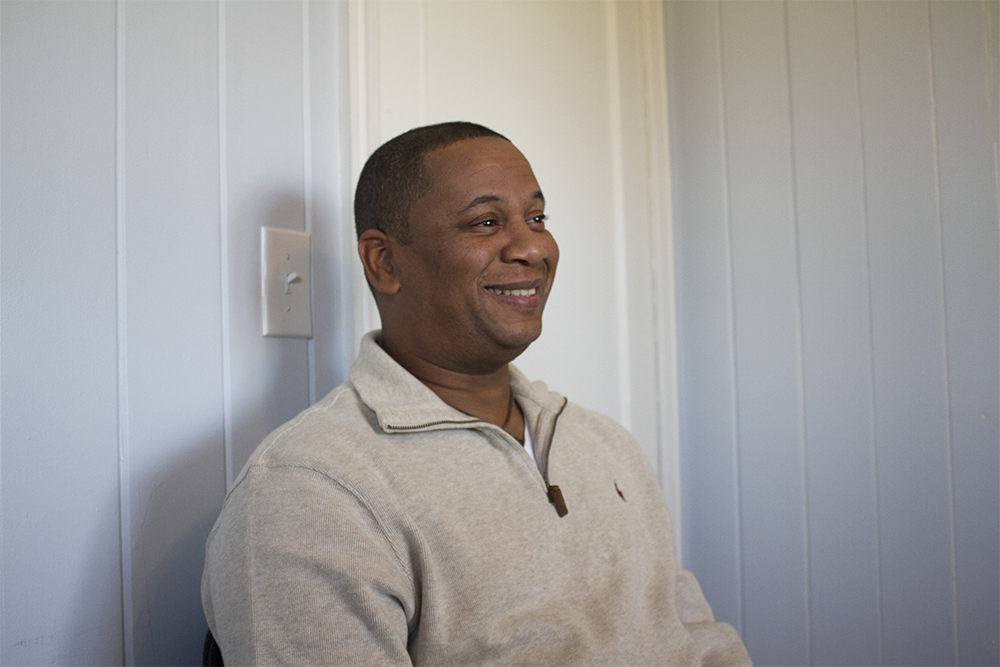
After retiring from a career driving trucks, Fore had fallen deeper into his addiction with crack cocaine. He has gone through recovery programs before, unsuccessfully (“those places were jokes,” Fore said). Now, just three weeks from graduating Brunswick Christian Recovery Center’s 16-week program, Fore said something feels different.
“Before I got here, I wasn’t a holy roller, or whatever you call them. But I’ll rock with them now,” Fore said. “Lady on the side of the street with the microphone speaking on the side in the crowd? I’ll root for her. Because that’s what it’s about.”
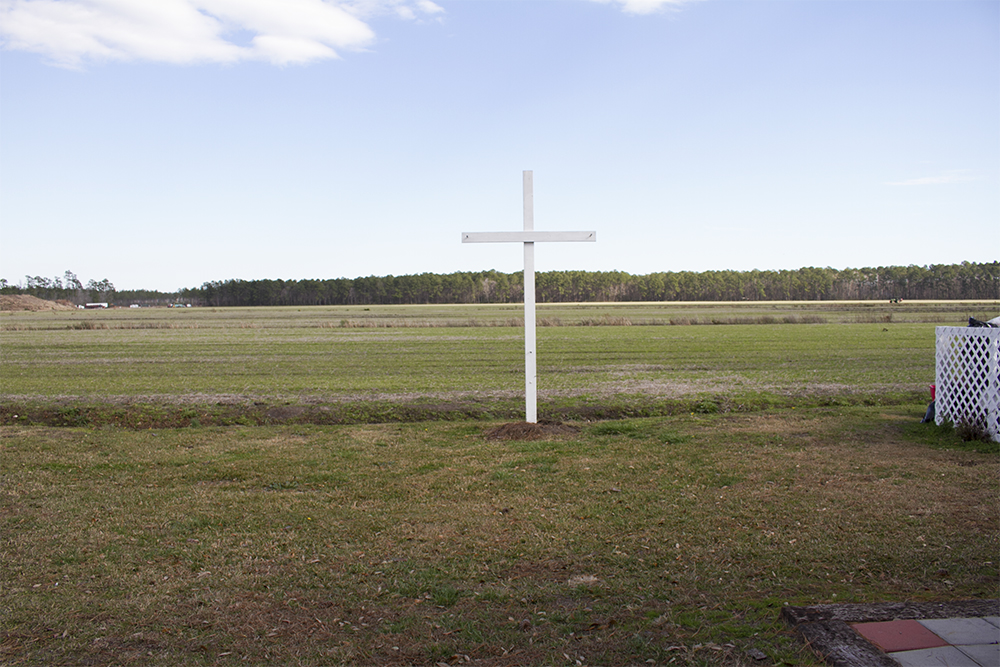
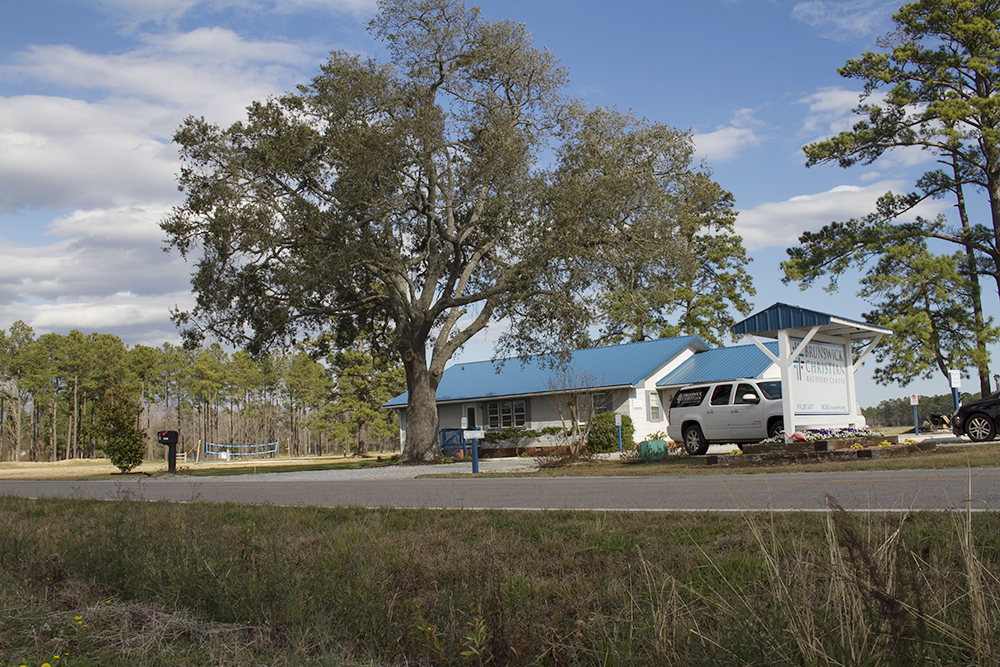
Brunswick Christian Recovery Center is surrounded by rural farmland off Ash-Little River Road in southern Brunswick County. Or, as Fore puts it, in the middle of nowhere. “You look that way you see ‘no,’ you look that way you see ‘where.’ Nowhere,” he said. “This is God’s country out here.”
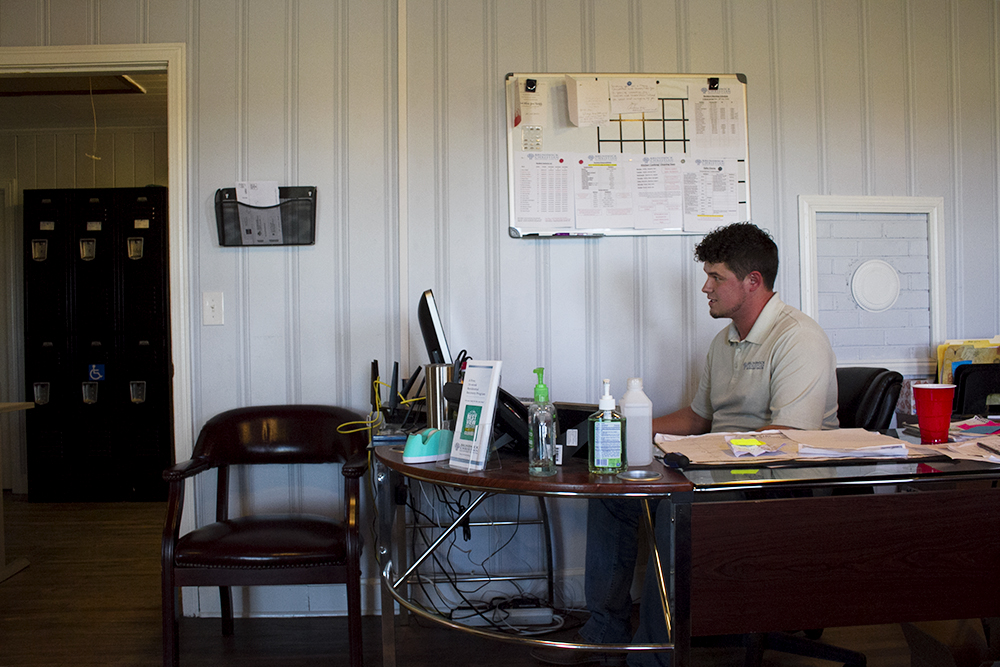
Situated in a Wesleyan Church campus built in 1958 in Ash, North Carolina, the old pastor’s living quarters has been renovated to house the center’s main office. This week, the non-profit closed on property a few miles nearby. It was also approved for a 28-bed facility that will be dedicated to its first all-female recovery center, opening up its services to women living with addiction issues.
The facility is the only live-in rehabilitation center dedicated to addiction recovery services in Brunswick County.
It’s faith-based — and it’s free.
What’s ‘success’?
For a process as intimate as overcoming addictive behaviors, secular recovery programs felt one ingredient off — “or a lot of ingredients off” — for Fore. He likened the programs he tried before to a cake that needs one more spoonful of sugar to bring the flavor together.
“To me, God is the end all,” he said.
Though supporters and participants of Brunswick Christian Recovery Center anecdotally report more effective addiction recovery through the faith-based program compared to secular programs, it’s difficult to definitively compare.
Because there is no standardized way to define rehab, it’s best not to rely on out-of-context success rates, according to the American Addiction Centers. Each program uses its own metrics to measure success or recidivism.
The center’s executive director, Joshua Torbich, remembers a public meeting four years ago, when he asked a representative for Trillium Health Resources (a current partner of the facility) how it defined success. The representative offered an example of a man who had been hospitalized for his alcoholism 37 times the year prior. By the next year, he was hospitalized 16 times.
“They put him in the ‘success’ category. I’m thinking to myself, my goodness. What a low standard,” Torbich said. “That day is when I asked the question that began to move things. And that was, well, what are we doing?”
Now, Brunswick Christian Recovery Center defines success by three major criteria, collected one year after completing the program. Is the graduate clean and sober? Does he have gainful employment or a steady income and? And is he living in a stable living environment? By these metrics, 74% of the center’s graduates in 2018 were successful, according to Torbich.
Brunswick Christian Recovery Center can accommodate about 28 male residents at a time. The non-profit started in 2010 as a group home, lead by a Baptist pastor. It functioned as a safe haven for those recovering from addiction, Torbich said. At 22 years old, cut off from his parents and struggling with a heroin addiction, Torbich first arrived at the center in 2013. He has since helped legitimize and build the program, helping to formalize its standing in the community.
Two years back, Torbich helped address a weak point of the program by introducing a third phase called the “exit strategy,” adding four additional weeks.
“This is where we weren’t doing what we should have been doing with people. There’s so many people who came here with all the potential in the world but they didn’t get that springboard-type opportunity to the next step,” he said.
This third phase is dedicated to helping residents transition into the community, giving them time to build life skills and provide on-the-job training. Brunswick Community College provides three, 15-hour credit courses and one trade school opportunity for each participant in the program. Through internship programs with several area companies, residents graduate with between $500 to $1,000 in their savings account.
With the assistance of the Brunswick County Literacy Council, each resident who enters the program without a high school degree will graduate with a GED.
Brunswick County
Brunswick County’s rate of unintentional opioid overdose deaths is 1.6 times higher than the state’s average, with 22.2 deaths per 100,000 residents from 2014-2018, according to the North Carolina Department of Health and Human Services (NCDHHS). Over the same time period, Brunswick County’s rate of outpatient opioid pills dispensed was also higher than the state average.
Between 2006 and 2012, 43,000,000 prescription pain pills were prescribed in Brunswick County, according to data obtained by the Washington Post. That equals about 61 pills per person, with Seashore Drugs in Calabash receiving the highest number of pills countywide over the same timeframe.
In 2018, Brunswick County Sheriff’s Office launched the Anchor Initiative, a non-profit founded to help those struggling with addiction find resources to detox and find treatment by partnering participants with a coordinator.
Emily Flax, spokesperson for the sheriff’s office, said the program helps break barriers.
“When someone reaches out to us for help, there is a break in the negative stigma of addiction and an established trust with the Sheriff’s Office,” she wrote in a statement.
Participants that are socially referred or report themselves to the Anchor Initiative will not be charged with drugs or contraband found in their possession.
“The conversations we have, the outreaches, the partnerships and collaborations we’ve made since the program started has made a tremendous impact, not only in our county, but most importantly the lives in those suffering from addiction,” Flax wrote.
In 2019, the program assisted 70 individuals. Over the past six months, the sheriff’s office has seen seven “graduates” from the program who have completed treatment, according to Flax. Twelve are currently in treatment.
“Sheriff [John] Ingram has said all along, if we can help one person get into recovery and learn to manage their addiction, if we can save one life, the program will be a success,” Flax wrote.
The Rose House
All eight staff members (four are interns) at Brunswick Christian Recovery Center are graduates of the program. Colton Maness, 29, is eight months sober. He lives and works at the center as a volunteer coordinator.
His struggle with addiction started with a prescription to opioids after a car accident; Maness was driving drunk, hit a transfer truck head-on, and broke his femur. Once the doctor stopped prescribing the pills, Maness sought out a fix and eventually turned to heroin.
“They ended up cutting me off. That’s really — I knew I was kind of messed up after that. That was kind of the beginning,” he said.
Like Fore, Maness came to Brunswick Christian Recovery after previously unsuccessful stints in secular recovery programs. He earned a spot at Brunswick Christian Recovery by calling the center every single day — a policy the center still maintains for its waitlist applicants.
“That helps us weed out the people who get here and aren’t ready. You’ve got to be broken down and you’ve got to really be ready to receive what’s here or you’re not going to get it,” Maness said.
During recovery, residents of the center often travel for short-term work assignments. They work long hours of manual labor, which Maness said serves as a helpful wake-up call for those who have previously spent their time serving their addiction. It also helps pay for their stay.
According to Torbich, the center provides volunteer labor at limited-run events for large corporations that donate to the facility (think: NASCAR races or state fairs). Besides the volunteer-donor partnership, the center is funded by grants and local donations.
A local funding item may soon show up on a Brunswick County agenda, thanks to Commissioners Mike Forte and Marty Cooke, who both serve on the center’s advisory board.
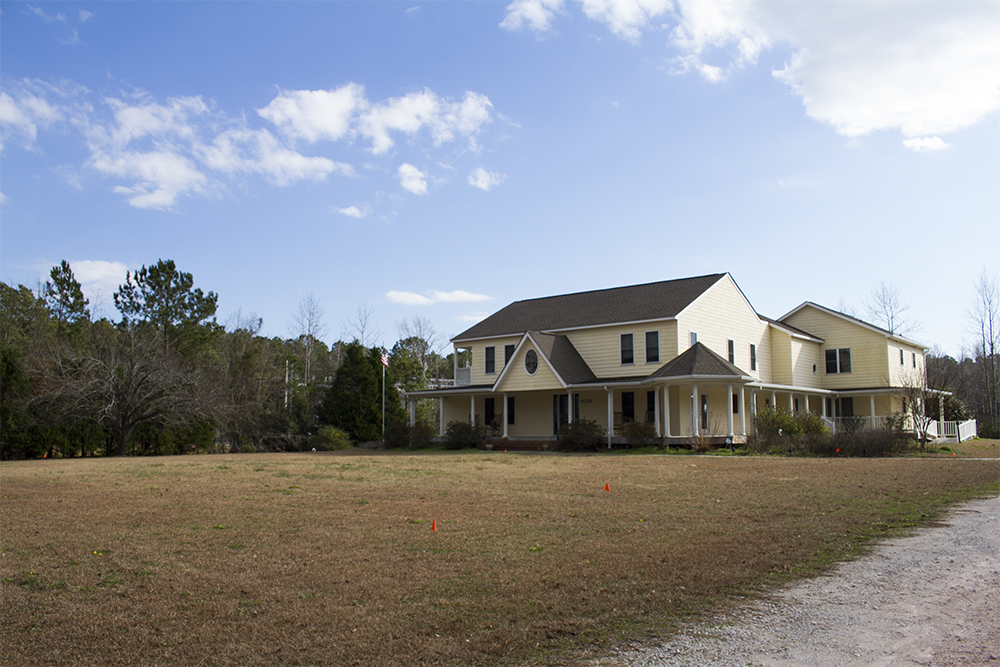
With The Rose House set to open this spring, Torbich knows the center will fill a void. Brunswick Christian Recovery Center receives three-to-four calls a week from women seeking help, which Torbich said they have to turn away but always try to help connect them with help, whether that means paying for their bus ticket or getting them to the nearest detox center.
Another step in the works would round out the center’s care; children of residents in the program would be covered for 16-weeks of comprehensive care, including therapy. This would be accomplished through a recently-signed Memorandum of Understanding with the Lake Waccamaw Boys & Girls Club, expected to be funded through the Governor’s Crime Commission by July.
Embracing recovery
Weekdays and on Saturday, the men meet at the 1960s church to work through the Life Recovery workbook and learn from one another in group counseling sessions. On Sundays, they travel down Highway 17 to attend the Beach Assembly of God, a Pentecostal church in Ocean Isle Beach.
Maness said the congregation embraces them. As someone who is overcoming addiction, Maness said the stigma weighs heavy, so acceptance is meaningful.
“You don’t realize how much a hug and a ‘we love you’ — a lot of people don’t really get that,” Maness said.”I know this one guy, he’s in there, he gives me a hug every single Sunday. And I don’t think he knows how much, sometimes, I still need that hug.”
Though he’s been sober for longer periods of time in the past after other recovery programs, Maness said through his faith, he feels his addictive traits have been unraveled. He said he’s still learning to trust his own judgment but gains confidence through his newfound family at the recovery center.
During meetings, the group will give out coins, similar to popular 12-step programs, celebrating time sober.
“Coins, Of course, time is one measure of success. But really, I think the thing about it — and this is just my personal opinion — I think the measure of success would be, giving back. How much are you willing to pour into others?” Maness asked. “I wouldn’t consider you successful if you came out of what I’ve been through and you keep it to yourself.”
“I give all my time to these guys just to get their light to come on,” he said.
Send tips and comments to Johanna Ferebee Still at [email protected]
