



The way Wilmington’s elected government is set up is written into the city charter, but it’s not written in stone. For example: the city could have up to twelve council members, some or all of whom could be assigned to represent specific districts, and terms could be two years, not four.
WILMINGTON — In North Carolina, the number of elected officials, how and when they are elected, and even the name of city or town they serve can all be changed by a public referendum vote, and it takes a relatively small number of people to get such a referendum on the ballot.
Under state law, there are three ways that fundamental changes to a municipal government’s charter can be made: the state legislature can pass a bill, local government can pass an ordinance approved by a public referendum vote, or the voters themselves can put forward a petition to change the charter.
Not everything in the charter can be changed this way (although in some cities, including Wilmington, there is a public route to passing new laws or amending existing ones, albeit one that was recently made more difficult at the city’s request). But there are nine things – including a city’s name, “form of government” (more on that later), and how it’s electoral system is set up – that can be altered under state law.
These changes to a city’s form of government are rare and alterations made by public petition are even rarer. That said, the state statute that allows them requires a relatively small number of petition signatures to prompt a city-wide vote: just 10 percent of a city’s registered voters or 5,000 residents – whichever is smaller (for Wilmington, that’s 5,000 voters).
So, what exactly can the public vote to change? And how does the process work?
What’s in a name?
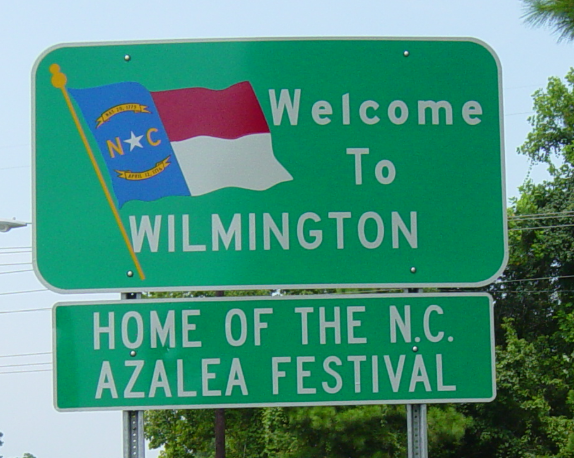
The first three changes are strictly aesthetic – although they certainly may be important to residents.
(1) Voters can call their municipality a city, town, or village (there are no legal or procedural difference between the three).
(2) Voters can call their governing body a ‘board of commissioners,’ a ‘board of alderman,’ or a ‘council,’ and their elected officials thus commissioners, aldermen, or board members (again, there are no legal differences).
(3) Voters can change the name of their municipality. The only legal condition is that it may not be “deceptively similar” to another North Carolina municipality.
Changing how the government looks, and how elections work
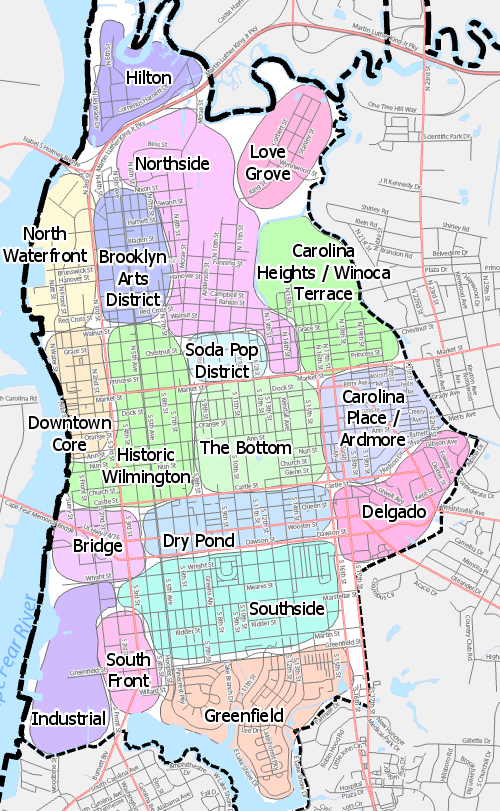
The next two would have much more impact, and shape a city’s government will actually look.
(4) Voters can change how long elected officials serve, choosing either two-year or four-year terms, or any combination of the two. There’s no statutory reason city’s can’t give longer terms to those getting more votes, or to designate particular council seats as two or four years terms. One thing voters can’t do is shift elections to even years to coincide with Congressional or Presidential elections (state law prohibits this, and many cities, including Wilmington, have fought to keep that from changing).
(5) Voters can change the number of council members, electing as few as three or as many as twelve.
The sixth change could have the most serious impact in elections, as it would actually alter the way officials represent voters.
(6) Voters can change the ‘mode of election,’ choosing to have candidates which represent the entire city or only specific ‘districts.’ There are a number of complicated options representing different election and representation styles. The main variable are as follows:
District vs. at-large: District council members represent only one district of the city and must reside in that area; there can be as many districts as there are council members, but they must have as equal as possible populations. At large members – which are what Wilmington residents currently have – represent the entire city.
(Note: voters can pick the number of board members, and thus the number of districts, but they have no say in the drawing of those districts, which remains the right and responsibility of the city).
Voters can choose to have all at-large members, or all district members, or a combination of the two. If voters choose to have a mix of at-large and district members, no more than half can be at-large.
Voters can also choose how district members are elected, choosing whether only the voters in a candidate’s district will have them on their ballot, or whether the entire city will vote for district candidates, regardless of where the voters live.
State statute provides other, more complex arrangements, including wards – essentially districts that nominate two candidates, both who live in the area, with one put forward to represent the district and one to represent the city (i.e. ‘at large’).
Election formats
(7) Voters can choose from four election formats:
- Partisan: Similar to how county elections are currently run, with primaries to limit the number of candidates in a particular party to the number of open seats.
- Nonpartisan plurality: Wilmington’s current format, in which the candidates are ranked in order of how many votes they get and ‘win’ open seats in that order. For example, if there are three open seats, the top three vote recipients take those seats. In this format, no one need win a majority vote.
- Nonpartisan primary: If there are more than two candidates per open seat, a primary election is used to whittle down the field.
- Nonpartisan election and runoff election: An election is followed by a runoff to ensure candidates win by a majority (this type of election is most practical for district seats, rather than an all at-large election like Wilmington’s).
Who’s the boss: Mayor v. manager
The last two changes focus on how the mayor is chosen and what kind of powers he has.
(8) Voters can choose to elect a mayor or have council appoint him. An elected mayor can either be given the power to vote on all council matters (essentially making them a council member) or limit them solely to tie-breaking votes. An appointed mayor, who serves until council votes to dismiss him, the mayor has a vote in all matters.
(9) Voters can choose either a mayor-council or council-manager form of government (Wilmington currently uses the latter).
A council-manager government includes a mayor who is essentially a city council chairperson, who also has the power to sign contracts on behalf of the city. However, much of the power over day-to-day operations belong to the city manager, who acts as the city’s CEO — for Wilmington, that’s Sterling Cheatham. All city employees answer to the city manager, who has the authority to hire and fire and appoint department heads. The manager also proposes the city’s annual budget, as well as setting the agenda and putting proposals before council members.
A mayor-council structure looks much different. In this form of government — sometimes called a ‘strong mayor’ system — the mayor is the CEO and has the authority to hire and fire and appoint department heads. The mayor doesn’t vote with the council but can instead choose to veto their votes — councils, however, can override this veto. In this setup, the mayor drafts a budget that council must approve.
Petitions: Getting the ball rolling
To put a proposed change in the form of government up for a vote, a petition needs at the right amount of signatures (at least 5,000 or 10 percent of the registered voters) that have been collected within a calendar year. Then, the petition is sent to the city clerk, who then delivers it to the local Board of Elections (who can verify that those signing the petition are, in fact, registered voters living in the city).
Importantly the petition does not have to be written in flawless legal language. It does require those crafting the petition to choose from the options set forth in state law. The petition can include multiple changes — for example, a single petition could change a city’s name, its number of council members, and switch to a different mayoral style (it can’t include ‘alternative’ or competing changes). The University of North Carolina’s School of Government (SOG) hosts a variety of ‘model forms’ for use by cities to change their charters — petition writers can use the same language, according to SOG.
Once a successful petition has been filed, city council must request the Board of Elections hold a special election — which must take place no less than 60 and no more than 120 days after the filing (that is, in a time period between two to four months after the filing).
One thing that can limit a voter petition is another proposed, recent, or recently attempted change to a city charter. There are three scenarios when that would block a new proposal:
- During the time between when a city council announces a public hearing for a proposed change and the 60 days window the council has to vote on that proposal.
- For 18 months after the effective date of a change made to the city charter, whether initiated by a council action or a voter petition.
- For 18 months after the day of a public vote on a charter amendment that is rejected.
Then what?
In the event of a successful petition, and a majority vote in favor of the change – or changes – what happens next is to some extent uncharted territory, at least for the state statute.
Some aesthetic changes could be put into place quickly (change a few ‘Welcome to’ signs, update a website, and etc.). Other changes would have serious impacts and would take time to implement.
State statute doesn’t address the issue directly, but reducing the number of council members, for example, would likely not immediately terminate those ‘excess’ members currently service; likewise, reducing terms from four to two years wouldn’t cause those in their third year to lose their seats.
By the same token, adding council members wouldn’t immediately change a board. Under state law, any change impacting council elections must be approved 90 days before the next election held under the new charter rules. For example, if 5,000 voters handed in a petition on Monday, July 29, the soonest city council could schedule a special election for would be September 27, leaving less than 90 days before the November 5 election. In that scenario, the changes would take place in 2021.
For other issues, it’s unclear what would happen if a city switched from the common council-manager system to the less common ‘strong mayor’ system, or if a city moved from an elected to an appointed mayor. The effective date of such a change could be set after the vote — that is, written so as to not take effect immediately — to give government change to restructure under an amended charter.
For more information, University of North Carolina’s School of Government maintains a FAQ and other resources, which can be found online here.
Send comments and tips to Benjamin Schachtman at ben@localvoicemedia.com, @pcdben on Twitter, and (910) 538-2001
