


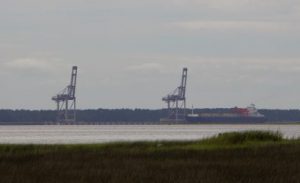
CAROLINA BEACH — For the past four years, the Town of Carolina Beach has been working with the Military Ocean Terminal at Sunny Point (MOTSU) to examine the potential environmental impact from the old fleet maintenance and operation facility which the town had placed on MOTSU property – it appears that the efforts of the town are nearing the end.
Town Council voted last week to approve a budget amendment for $186,264 to be moved from the utility fund to pay for a contract from The Clark Group that will provide remediation and monitoring of soil and groundwater.
The Military Ocean Terminal at Sunny Point is a military depot located across the river outside of Southport. It transports all munitions for the military, Town Manager Michael Cramer said.
“MOTSU owns several thousand acres of land on Pleasure Island as a buffer zone in case of a munitions explosion at the terminal. The Town of Carolina Beach leases property from them for water, sewer and stormwater infrastructure, like stormwater ponds, waste water treatment plant, and wells,” Cramer said.
While the town saw continued growth from the 1980s until 2012, operations grew on the MOTSU property greater than authorized limits.
“Due to the breach in authorization, we were asked to remove the Operations Center and Vehicle Maintenance Facility, perform environmental tests and remove any contaminants found. We have been working through that process for the past four years,” Cramer said.
While the initial testing was broad, The Clark Group has managed to narrow the areas of concern to four small areas – the financial cost of getting to this point has been approximately $217,000.
The new plan will remove contaminated soil and dispose of it properly, as well as continue to monitor the areas of concern.
What has been found?
The Clark Group listed its four areas of concern as, petroleum groundwater contamination, the discovery of an underground emergency generator tank, areas of polynuclear aromatic hydrocarbon contamination in soils, and the discovery of perchloroethylene in soils and groundwater.
The petroleum discovered in the groundwater was caused by underground tanks situated in the area previously used for fueling vehicles. Over the last four quarters, these areas have been monitored. According to The Clark Group, the contaminates seem to have completely removed themselves over time. The company will continue to monitor the areas to ensure the complete attenuation, Cramer said.
The underground tank that was discovered was part of an emergency generator. It also is an issue that could be closed, but MOTSU has been resistant to accepting this and the company will install three monitoring wells. This will determine if there is the need for any more remediation.
Polynuclear aromatic hydrocarbon contamination has been found in soils on site and are attributed to, “Very old sand asphalt paving which was buried in overlying sands,” according to The Clark Group. The company has managed to negotiate with regulatory agencies and no additional work in these areas would be required. The buried asphalt will be left in place.
The final area of concern, the discovery of perchloroethylene in soil samples and groundwater, can be attributed to cleaning solvents. The Clark Group recommended the town excavate the contaminated areas of soil, as well as directly underlying groundwater, and dispose of it properly. The company will also continue to monitor groundwater until precursor incident closing conditions are met.
Town council approved the budget amendment without discussion.
