


WILMINGTON — Wave Transit bus operators are currently in contract negotiations with Transdev, the management company overseeing the collective bargaining agreement with the union. However, the union wants more than its employers are willing to give.
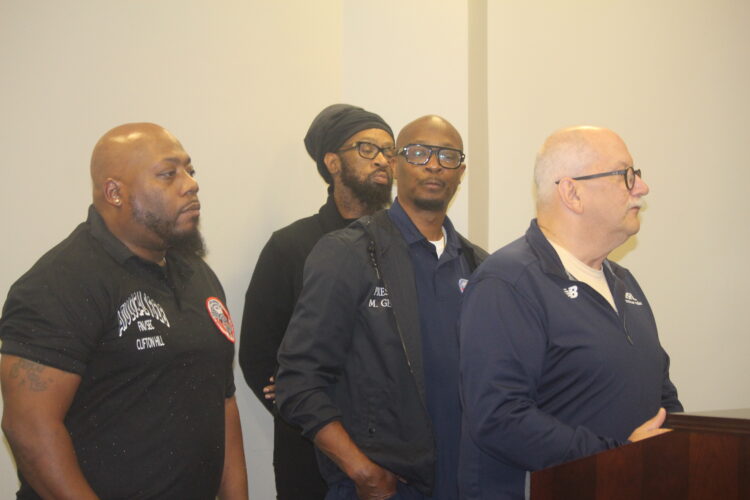
Yzosne Riley, head of the Wilmington branch for ATU Local 1328, and bus operator Tony Lipari first brought the bargaining issue to the Cape Fear Public Transportation Authority at its Sept. 24 meeting. Riley, alongside other union representatives like 1328 president Michael General, finance secretary Clifton Hill and vice president Michael Winston, have been in discussion for better wages, organization, employee policy updates and other needs.
Foremost, the union wants pay increases that match the rising cost of living. According to the Bureau of Labor Statistics, transportation workers in Wilmington make, on average, $20.64. The starting pay for Wave is $19 an hour. The maximum amount a Wave bus operator can make, according to Riley, is $26.20 an hour.
READ MORE: Following DSA bench dispute, Wave Transit approves new donation program
“I asked a question in our union meeting,” Riley said. “‘By show of hands: How many people in here are meeting their needs?’ Out of the 30 people that showed up for the meeting, three raised their hands.”
When asked how many were living above their means, the remaining 27 raised their hands.
The current contract is roughly three years old and included a 4% raise. According to Riley, Transdev is willing to give the same raise; however, Riley is asking for 7% for the 40 workers in the local union. Though she said a 9% raise would have them living comfortably; according to MIT, $22 is a livable wage in Wilmington.
Many bus operators are working a part-time job to make ends meet. For example, Riley drives school buses in the mornings and after working for Wave, often picks up a few hours doing DoorDash.
According to Transdev general manager Tony Johnson, the 4% offer is what has been budgeted for by Wave and the CFPTA: “I can’t give what I don’t have.”
Wave is funded by the county, City of Wilmington, UNCW and the federal government annually. This year’s budget is $17.4 million, with UNCW providing roughly $1.3 million. The county gave $1.7 million and the city, $2.5 million.
In past year budgets, employee wages have made up around 30%.
Lipari and Riley, along with a handful of union members, brought their concerns to the CFPTA Sept. 24, stating they wanted the board to be aware of how the collective bargaining was going and what the environment at work was like.
Board chair and New Hanover County Manager Chris Coudriet said in response: “As a governmental entity in North Carolina, we cannot work directly with or negotiate with [the union].”
The transit authority and its board cannot negotiate with the union. Under North Carolina General Statute 95-98, local governments, including transit authorities, are not allowed to bargain, negotiate or really interact with unions. Aside from hiring Transdev, Wave and the CFPTA can only approve the Wave Transit budget, providing the funds for employee wages to Transdev once a contract has been signed. It cannot step in further.
Riley and Lipari explained Transdev also refused to give employees step-up increases, essentially pay bumps or bonuses based on merit and employment length. Riley has hit the cap for hourly pay at $26.20 an hour, but Lipari said he hadn’t been given his 40-cent raise; he’s been there roughly two years, which mandates a step-up increase.
He also feared having his hours cut as a result of speaking at the meeting; Riley said others in the union felt too intimidated to voice their concerns.
Port City Daily reached out to Wave to confirm whether pay increases have been purposefully withheld and if it considered this retaliation. A spokesperson said “Transdev informed the authority that step-increases for bus operators and maintenance personnel are being processed for implementation.”
Lipari also cited to the board and Port City Daily the high healthcare costs as an issue, too; the operators’ deductible is $5,000 and monthly premiums have only grown more expensive.
“It’s nice to have insurance, but unless we’re critically ill and can hit that $5,000 mark right away, we’re paying out of pocket,” Lipari said at the meeting.
Riley said when taking out all taxes and premiums, less money comes home.
“Every two weeks,” she said, “you’re clearing $1,300 — your take-home for the month is $2,600, not even $3,000. 1,800 is going to your rent. Then your groceries, your car, your insurance. It’s not enough.”
The union also wants to see changes in the way Transdev manages the bus services, and policies, such as absenteeism and tardiness — called an “occurrence policy.” They said company rules mandate if an employee is late eight times, they will be terminated and can’t be rehired. Riley brought up to the board she thought it was unfair, considering someone found with drug paraphernalia is permitted to return.
“If you get in a situation where you get fired because of paraphernalia, you have a second chance agreement,” Riley said to the board. “I miss eight days, I don’t get rehired.”
However, Wave told Port City Daily this was not true, and that operators fired for absenteeism are eligible for rehire. The transit authority also clarified its rules for rehiring those testing positive for drugs.
“If a bus operator tests positive for drugs, they are terminated by Wave Transit immediately. There is an opportunity for that individual to become eligible for rehire if they successfully complete a Department of Transportation (DOT) mandated substance abuse program. If the professionals assessing them through that federally mandated program determine that they have been successfully rehabilitated, that decision is processed through a database kept by the DOT. At which point, they could be considered eligible for rehire at Wave Transit,” a spokesperson said. “It does not guarantee that they will be rehired, but it opens the door for consideration. If they were rehired, they would be subject to additional drug testing on top of the standard random drug testing all operators are subject to. The extra testing would continue for at least 12 months.”
Riley said it also takes a full year for an occurrence to be absolved; Riley wants to shorten that to six months.
When asked if Transdev would work toward changes suggested by the union, Johnson said: “We’re open to anything.”
Further, both Lipari and Riley brought up high turnover rates on the job, which they attribute to low wages but also hiring employees without a commercial drivers license. Wave offers CDL training for new drivers, and both union workers explained trainees, particularly young people, will receive the certification before leaving to find a higher paying job.
“We’re lucky if one or two stay beyond 30 or 40 days because it’s just not consistent,” Lipari told Port City Daily on Monday. “It’s kind of scary because it’s, like, you’re spending thousands of dollars bringing on these young drivers and they’re getting their license and they’re leaving.”
According to a Wave spokesperson, the turnover rate for bus operators was 54% in fiscal year 2023-2024, 33% in fiscal year 2024-2025 and 32% in fiscal year 2025-2026.
Lipari and Riley both said Wave has an issue with being shortstaffed with its 47 bus operators.
Wave said they have 50 bus operators and the percentage of scheduled service delivered from June through August 2026 was 99.9%. These numbers only include operators who graduated from training and have CDLs, not those who leave before becoming full-time employees, as Lipari noted.
Lipari and Riley told Port City Daily and the CFPTA board that routes for UNCW are understaffed as a result. They added being shortstaffed affects workload, with some forced to drive when there aren’t enough people to run routes.
“That’s normal all around the country,” Johnson said of calling people in as needed. “And I don’t do the scheduling, that’s done by the authority itself.”
Port City Daily reached out to UNCW to see if the school has felt impacts like delays but a spokesperson said it had not experienced any disruptions.
“This is the first time ever where we don’t have enough drivers to work those shifts,” Lipari said. “When I started, and again, this was not even two years ago, that was like the cream of the crop because it was Monday to Friday, weekends off, which meant you could pick up time on the weekend.”
Because Transdev’s contract renewal is coming up in June 2027, Riley said she anticipates negotiations will wrap soon, adding a strike is not completely feasible because of union members’ financial situations.
While the two parties continue to negotiate, Riley said the next meeting has yet to be scheduled.
[Ed. note: The article has been amended to correct information supplied regarding rehire eligibility and to include Wave’s rules for rehiring those terminated for absenteeism and who tested positive for drugs. Port City Daily regrets this error.]
Have tips or suggestions for Emily Sawaked? Email [email protected]
At Port City Daily, we aim to keep locals informed on top-of-mind news facing the tri-county region. To support our work and help us reach more people in 2026, please, consider helping one of two ways: Subscribe hereor make a one-time contribution here.
We appreciate your ongoing support.
