


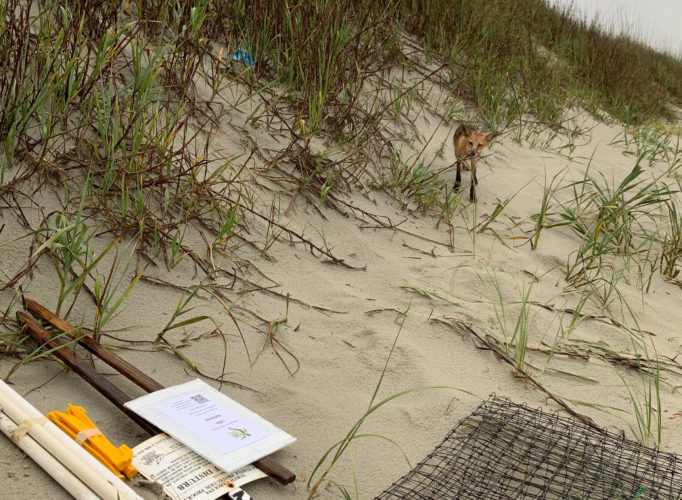
OCEAN ISLE BEACH — Leaving out food for neighborhood cats or throwing a snack to a curious fox on Ocean Isle Beach now comes with a fine after town commissioners voted unanimously to amend its ordinances last week.
The expanded policy prohibits feeding “stray or wild animals,” with the exception of birds, on public property within town limits. Specifically, it includes game animals, feral swine, amphibians and reptiles and “non-domesticated carnivora.”
READ MORE: OIB backpedals on fox trapping, will seek alternatives
Town Administrator Daisy Ivey told the board during its Jan. 10 meeting, the recommended change was the result of a recent controversy involving a defunct policy to trap foxes.
The town signed off on trapping foxes and sending them to hunting preserves in November, in an attempt to help the Ocean Isle Beach Sea Turtle Protection Organization. The agency was concerned about their volunteers’ safety — recently, foxes have been wandering around while they’re working at hatchling nests.
Fox trapping drew the ire of People for the Ethical Treatment of Animals in December. The animal rights organization characterized the hunting preserves, which state regulations define as enclosed areas in which foxes are pursued by dogs, as cruel. The only other legal option for trapped foxes is euthanasia.
OIB abandoned trapping entirely under public pressure last month after commissioners learned more about penning. The town never hired a trapper or captured a fox.
Ivey specified at the meeting the town’s recent ordinance update prohibits leaving food out for feral cats as well. Mayor Pro Tem Dean Walters asked how cats fit into the equation, to which commissioner Wayne Rowell retorted “because if you feed a cat, you’re feeding the foxes too.”
The North Carolina Wildlife Resources Commission maintains resources on humans avoiding conflict with wildlife. It notes that unsecured trash and food left outside, even if it is intended for pets, is a vector for unintentionally feeding opportunists like raccoons and foxes.
In December, NCWRC biologist John Henry Harrelson told Port City Daily the commission typically recommends informational campaigns to stop the public from feeding wild animals. Specifically, he said he sees it with tourists feeding alligators.
This came up during the Jan. 10 meeting, with commissioners pointing to alligators occasionally settling down in golf course ponds because of the proximity to people.
Anyone spotted violating OIB’s updated ordinance — either by a town official or on camera — can be cited a $50 fine.
Mayor Debbie Smith implored the town’s police department to make an effort to educate people prior to issuing a citation.
Town leaders also suggested reaching out to lawmakers for assistance with the fox issue. Mayor Smith did not respond to a request for comment on lobbying progress or other new policies by press.
Ocean Isle Beach Sea Turtle Protection Organization coordinator Deb Allen said she hopes the town will enforce the new rule, as hatchlings are a natural food source for foxes. Allen said they dart between her volunteers while they work on site.
She directed the first North Carolina Sea Turtle Symposium, held at UNCW on Saturday, and reported attendees from 14 other islands were shocked by photos and videos revealing how bold the foxes are on OIB.
“They don’t have similar problems on their islands,” Allen said. “The foxes are getting into their nests and that kind of stuff, but they’re not getting near people like they do on Ocean Isle Beach.”
Also during the symposium, talks focused on keeping predators out of unattended turtle nests, but Allen said that is a separate issue from ensuring people are safe while volunteering.
Foxes are recognized as a rabies-vector species by the Centers for Disease Control and Prevention. Someone was bitten by a rabid fox in Southport in May and two other foxes in Brunswick County tested positive for rabies last year.
Allen said in her organization’s experience, the foxes seem to be more attracted to nests when volunteers are working because they have come to associate people so closely with food. She is still skeptical about the town influencing visitors to not feed the foxes during the summer months, when tourism and sea turtle hatches are at their peak.
“I really hope this new ordinance will start to have some bite to it,” Allen said.
Have tips or comments? [email protected]
Want to read more from PCD? Subscribe now and then sign up for our newsletter, Wilmington Wire, and get the headlines delivered to your inbox every morning.
