

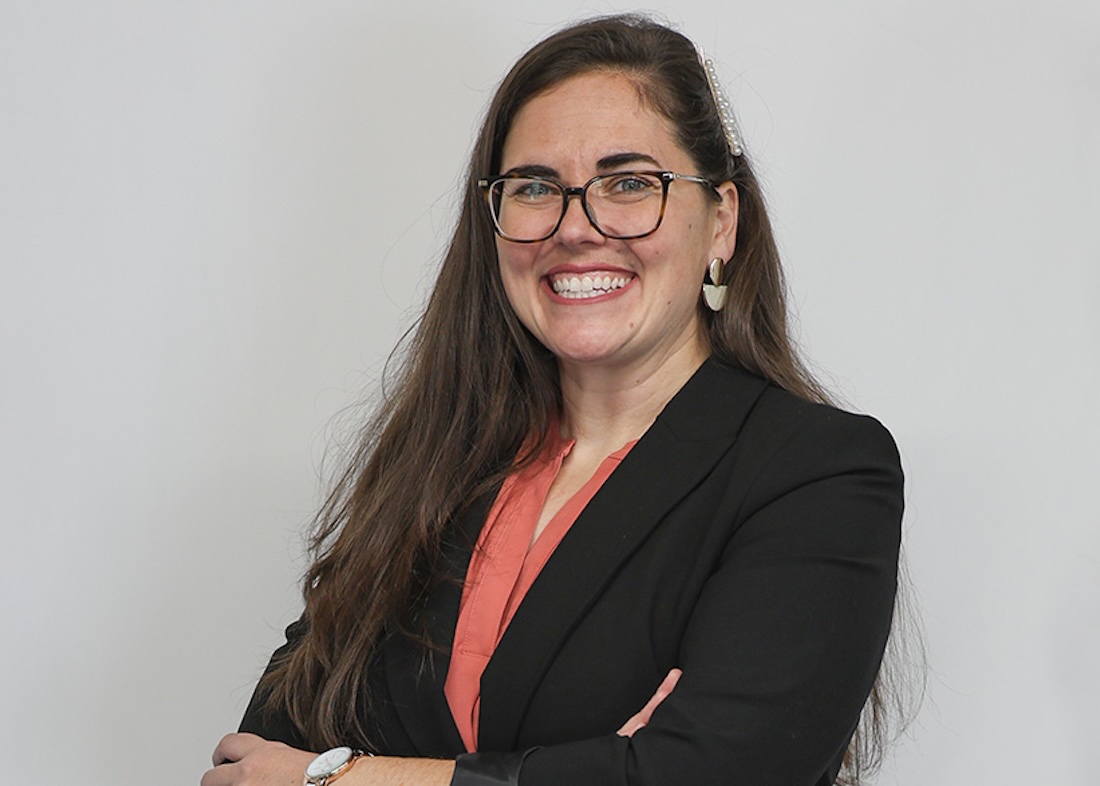
Josie Barnhart, Republican incumbent
New Hanover County School Board
Career: Mathematics educator
Education: Mathematics education, minor in mathematics
Q: Why should voters support you to represent them on the New Hanover County Board of Education?
A: As a current elected official, I have worked hard to replicate opportunities for all students across New Hanover County Schools, no matter what school they are zoned for. As a district, we need to replicate programs and opportunities that are effective in closing the learning gap, and we need to replicate effective teaching practices so all students are successful. Continuing to support student proficiency and opportunity will remain my goal while serving on the board.
Q: Name one top policy change you want to see and how you will get that passed.
A: Streamline technology use in our school district. I support a tiered technology-use model in which Pre-K–2 students do not have screens at school, or have only very minimal weekly use; grades 3–5 have slightly more access to ensure testing knowledge and key computer skills. In middle school, I support students having access to technology for lessons at school, and I support high school students receiving a 1-to-1 device they can bring home for assignments. Technology can be used to enhance lessons, but it should not be the primary source of instruction.
Q: The current school board and district staff have been clear about the shortcomings in the state’s funding model and the limitations of county funding. What new solution or approach would you bring to the table?
A: I personally support a weighted student funding model. The current model of ratio funding for districts creates challenges in schools where a specific number of students yields a certain number of staff. Oftentimes, this ratio leads to a fraction of a person or staff member, which in turn leaves local funding to pick up the difference. I think utilizing a model in which more funding is given based on certain weights (for example, exceptional children, poverty, academically gifted, or multilingual) would allow school districts to build and staff schools in a way that is more responsive to student needs. While that particular change is a huge overhaul of educational funding, I have openly supported a weighted EC funding formula that has already been piloted across the state. I would also encourage removal of the percentage cap for EC students.
I have also helped obtain funding for advanced teacher roles. New Hanover County is one of one-third of the counties statewide that receive that grant, which allows highly effective teachers to co-teach with other teachers and earn more money. This was included in the first budget after I entered office.
Q: Superintendent Chris Barnes has been authorized to put together a 10-year sustainability plan in March, which could highlight where the district can close school facilities and reduce costs associated with its current overhead. Do you support this effort and, if so, how would you like the district to proceed with this study and its implementation?
A: I do support this process. As a district, overall enrollment has slowly been declining and, as we move forward, we need leaders to take a proactive approach in evaluating how our building spaces are being used. From a business perspective, leaders need to lean into an optimization number in terms of student capacity so that we can staff facilities as we best see fit. Many factors need to be taken into consideration: age of buildings, building capacity, and current enrollment numbers need to be looked at prior to any changes in building use. Reaching the optimization enrollment number is a priority for me as I evaluate building spaces. Rezoning in 2021 focused heavily on racial demographic diversity with zero regard for maximizing facility use. This has not yielded academic success.
Q: The district is also looking to obtain grant funding for a study on how much time students spend with screens in class. Where do you stand on student technology use, particularly screen time and AI in classrooms?
A: I support a tiered technology-use model in which younger children spend very little time on screens during the week. Many studies have shown the negative impact screens have on students. We need to prepare students for appropriate technology use and also use our teachers’ expertise when implementing engaging lessons. Teachers can utilize AI to enhance engagement opportunities and quickly create additional support for students. I do not like AI for student use. I believe student use of AI hinders their critical thinking skills and puts them at a disadvantage as they prepare for the future. However, knowing AI is available outside of school, our staff need to expect students to utilize it even without permission, which makes it even more imperative that our staff is prepared to address that reality.
Q: Is there a capital need that you would have liked to see make it onto the school bond? How would you work to fund that project in the future?
A: I have worked with our county commissioners to increase school funding every year since being on the board. Prior to my serving, the annual capital budget was between $2 million and $3 million; since I have been serving, it has averaged $6 million to $7 million. A large portion of that funding was for renovations at New Hanover High School. When working with our county commissioners, it is important to be able to articulate the needs and the timeline for the changes so they can plan in conjunction with their annual budget. Proactively projecting capital needs multiple years into the future will allow the county to continue to be responsive in supporting schools.
Q: The state recently mandated a specific process for handling book challenges. It requires the school board to weigh in on all challenges, supplanting the district’s multi-layered challenge and appeal process. However, the state doesn’t specify if the board has to remove the book from all schools or grade levels, versus just the school where the book was challenged. Should a parent challenge at one school trigger a district-wide review, or should the concerns stay local? Why?
A: Accountability should apply throughout the district. Removal of content has only three legal boundaries. I believe any content that crosses those boundaries does not belong in our district. As a board member, my job is to uphold the laws. Any person who brings forth a concern deserves a fair process; that process sometimes may result in removal of content based on legal criteria. In the event that content is not aligned with the law, I believe it should be removed from the entire district. Furthermore, if content breaks the law, it should not be present in our school system in the first place. Any board member unwilling to abide by the law puts the district at risk of being sued, and thus of losing valuable financial resources that should be placed in the classroom rather than a courtroom.
Q: If you had to redistrict as a board member, how would you go about that process?
A: Considering the small, steady decline in district enrollment, redistricting is very much a possibility for those elected. Redistricting in years past has been based on demographic makeup; this is not effective. The lens I would use is optimization of facilities. Schools are in the business of educating people, and schools are funded based on the number of students. As leaders, we need to ensure that our buildings are reaching optimization capacity. What I mean by that is, at the local level, we have desired personnel we want at each school — support staff, administrators, interventionists, teaching assistants, etc. — and if there are too few children, we cannot staff the school the way we want. We need to maximize our facilities so they are occupied at the optimization number for staffing, so that more resources can consistently remain in our buildings rather than having to share staff between facilities.
Q: What do you think The Endowment should fund for schools?
A: New Hanover County has a beautiful opportunity to enhance our schools with The Endowment. We have been able to secure grants that have supported student growth and academic intervention. This year The Endowment has agreed to support our school infrastructure. This infrastructure investment is the largest we have seen in our schools, and the impact will be seen for generations to come. Moving forward, I would like to see The Endowment share more criteria for the projects they are seeking to fund, so that NHCS can be responsive in writing a grant to fulfill that goal. Grants we apply for and receive typically have criteria they are seeking, so when the district writes the grants, it does so to be responsive to the criteria given. Working collaboratively with the endowment will allow students and staff a more enhanced learning experience.
Q: What should be done to improve the district’s five low-performing schools? Why does New Hanover County have some of the highest-performing schools in the state—and then some of the lowest-performing ones in North Carolina?
A: All schools submit school-improvement plans on a biannual basis that the Board of Education approves and that are then submitted to the state. Plans for all low-performing schools must be submitted annually. As a board member, I have looked for changes to those plans so that more students can be successful. Board members do not need to rubber-stamp a plan, but rather encourage innovation and change so that more of our students will be successful. As a board member, I continue to support early intervention for students and opportunities for growth in all schools in New Hanover County. We need schools to have high parental involvement and effective teaching practices, and we need to keep high standards as we strive for all schools and students to meet their full potential. Keeping the standards high while supporting students is the goal. NHCS is on the right trend; what we are doing is working well. Thank you to all our staff.
At Port City Daily, we aim to keep locals informed on top-of-mind news facing the tri-county region. To support our work and help us reach more people in 2026, please, consider helping one of two ways: Subscribe here or make a one-time contribution here.
We appreciate your ongoing support.