

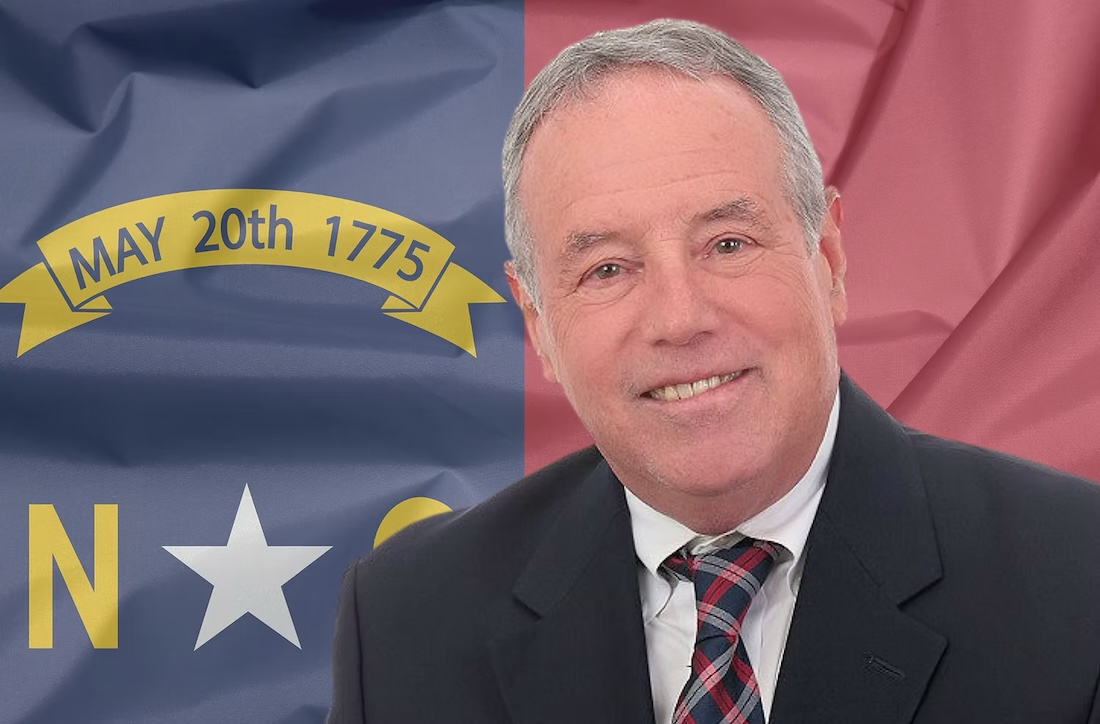
Dennis Breen, Democratic challenger
NC House District 17
Career: Attorney
Education: Bachelor’s from the State University of New York at Brockport; graduate degree from SUNY at Binghamton; law degree from the University of Dayton School of Law
Q: What qualifies you to serve in the North Carolina legislature?
A: As an attorney I have been fighting for client’s rights for over 40 years. My ability to understand complex policy, laws and my effective communication skills would enable me to best represent my constituents. As a public servant, I am committed to representing my fellow citizens and not special interest groups. Representing the residents of Brunswick County would be an honor.
Q. What is a bill you would like to sponsor or co-sponsor and what is a bill you want to repeal — or even amend? Why?
A: I would vote against House Bill 765 because it severely restricts a county’s ability to properly manage growth in keeping with the will of the citizens it impacts. It also allows developers to sue the county’s decision-makers if a development is denied. House Bill 496, which I would also have voted against, strips local governments of their authority to regulate tree removal. The massive clear-cutting of trees in Brunswick County has increased flooding and harmed our environment.
I would sponsor a bill that would allow counties to impose impact fees on developers for roads and schools. Taxpayers shouldn’t have to foot the bill for needed infrastructure upgrades due to new developments.
Q: What will you do to hold industry accountable for pollution of toxic chemicals, such as PFAS or 1,4 dioxane, in the water or air? Will you support enforcing additional maximum contaminant levels of PFAS compounds, aside from PFOA or PFOS; how, if so?
A: The recent PFAS settlement in North Carolina is a step in the right direction, but it does not solve the problem for our residents with contaminated well water. It does require Chemours to provide clean drinking water to residents with contaminated wells by providing one reverse osmosis filter for drinking water only, but it does not address the fact that these residents and their children will still be bathing and brushing their teeth with contaminated water. Recent research shows that PFAS can be absorbed through human skin and enter the bloodstream.
The settlement does not cover private property damage or individual personal injury lawsuits brought by residents. I filed a class action lawsuit against Chemours and DuPont on behalf of Brunswick County residents. The case was started in Brunswick County but removed to Federal Court by the defendants. A Federal Judge dismissed the case so I filed a motion to contest the order. I will continue the fight to provide toxic free water for all Brunswick County residents.
Q: Is the public school allotment formula sufficient or does the legislature need to change it? Explain what your plan is for this issue.
A: The public school allotment formula is the state’s method for distributing education funding. However, the Republican-led legislature has imposed significant funding freezes, grant cancellations, and budget restrictions. In addition, Trump has proposed cutting $2.3 billion from the already underfunded Department of Education in 2027. Combined with North Carolina’s low investment in education, these actions have left the state ranked 51st in education funding as a share of GDP (including Washington, D.C.), 48th in per-pupil spending, and 43rd in teacher pay.
Change is clearly needed. We can take the following steps: Comply with the court-mandated Leandro v. North Carolina ruling by directing educational resources where they are most needed. Increase teacher pay and strengthen retention efforts. Make targeted investments and expand grant funding. Adopt student-centered approaches to education.
Q: State law allows law enforcement agencies, including the State Bureau of Investigation, to store data captured by license plate reading cameras (Flock cameras) for up to 90 days. Since the CEO of Flock cameras has now recommended agencies reduce the time camera data is stored down to seven days, would you make it a priority to change state law to follow this recommendation?
A: Yes, I would make it a priority to reduce the time camera data is stored down to seven days because approximately 90% of all searches on Flock happen within a week of the data’s collection. If a search is tied to a case number, the data is preserved past seven days.
There should be regular independent audits of all agencies using Flock to ensure searches are not being used illegally. The agencies must also be responsive to public records requests regarding data captured by Flock systems. There is state and federal litigation addressing my concerns about Flock cameras being a warrantless search under the Fourth Amendment, mass surveillance of everyday drivers not suspected of a crime and privacy violations.
Q: Do you support how the film grant program currently operates? Do you think the $31-million annual cap on award disbursements should be lifted? Do you think the General Assembly should allocate more money to the program?
A: In the last 10 years, film production companies have spent over $1.4 billion in North Carolina and supported more than 67,000 jobs. These companies are attracted to North Carolina because of a 25% rebate on expenses and purchases provided by the North Carolina Film and Entertainment Grant. The controversial $31-million cap must be lifted to ensure the continued growth of this vibrant industry. I propose a capless, transferable film credit for North Carolina.
Q: Would you support rolling back the sales and use tax exemption for data centers to build in North Carolina? Explain.
A: Data centers should not receive a sales and use tax exemption because they do not produce any significant long term employment opportunities. Once the data center is built, it only employs a small number of people. I’m concerned about the massive amount of electricity and water the centers consume and the impact on our residents’ utility bills. There is also the potential for more toxic forever chemicals, PFAS, being released in the center’s wastewater.
Q: The current gas-tax funding system for the NCDOT no longer seems to efficiently support necessary projects – including the Cape Fear Memorial Bridge replacement. Is tolling the answer; what other funding mechanisms would you support? Would you vote on legislation to allow the Turnpike Authority to toll the Cape Fear Memorial Bridge if it comes before you?
A: The current Cape Fear River Bridge was constructed in 1969 and was expected to accommodate traffic conditions at that time. It is functionally obsolete and struggles to handle today’s regional traffic demands and the freight traffic serving our Port City. The cost of replacing the bridge is estimated to be $1.1 billion. The NCDOT has committed $85 million to the project with the Bridge Investment Program of the USDOT contributing $242 million. How will the shortfall be covered?
I do not advocate tolling. Tolls would push traffic onto local downtown streets. Historic Wilmington deserves our protection. Tolls would burden residents and commuters who already pay taxes to support roads and bridges. Hundreds of thousands of area residents cross the bridge for healthcare, jobs, goods, services and entertainment. Wilmington’s total economy is impacted.
The additional funding needed to complete the new bridge should come from an increase in corporate taxes. Corporations should share the cost because they stand to benefit substantially from the project. Raising the corporate tax rate to only 5% would add approximately $1 billion to the state budget, providing more funding for bridges, roads, and other infrastructure.
Q: Would you vote to implement an independent commission to draw legislative and congressional lines? Why or why not?
A: Every 10 years, after the U.S. Census, states redraw the boundaries of congressional and state legislative districts. Gerrymandering is the manipulation of voting district boundaries to give one political entity an unfair advantage in elections. It has been a thorn in the side of American democracy since 1812. A 2019 Supreme Court ruling states that the maps cannot be challenged in federal court. Thus, the states are wholly responsible.
Politicians are choosing voters instead of voters choosing politicians. North Carolina’s current gerrymandered districts are cut with surgical precision to virtually ensure 10 out of 14 congressional races are won by Republicans. Yet, North Carolina, a purple state, is consistently a battleground state that often elects Democrats to statewide offices.
Because both parties are guilty of gerrymandering, and because such grievous offenses have been perpetrated for so long, the only reasonable solution would require an independent, non-partisan commission in every state to redraw the district boundaries.
Q: In terms of economic development, North Carolina gets high marks for business, but middling and lower marks for worker satisfaction and quality of life. What would you do to improve these metrics for state residents?
A: We should raise the minimum wage, which hasn’t increased in 17 years, enact the recommendations of the NC Task Force on Child Care and Early Education to make childcare more affordable and accessible and increase the availability of affordable workforce housing for our teachers, nurses and first responders.
There is a difference between workforce housing and low-income housing. I would change the requirement in the North Carolina Workforce Housing Loan Program that a developer has to receive low-income housing tax credits in order to qualify for the Workforce Housing Loan Program. This would encourage more developers to apply for the loan program and build more workforce housing.
We should also repeal the ban on collective bargaining for public sector employees, repeal the barriers to forming a union and have state mandated paid sick leave for full time employees.
At Port City Daily, we aim to keep locals informed on top-of-mind news facing the tri-county region. To support our work and help us reach more people in 2026, please, consider helping one of two ways: Subscribe here or make a one-time contribution here.