


North Carolina’s film industry could see a heavily downsized incentive to stay.
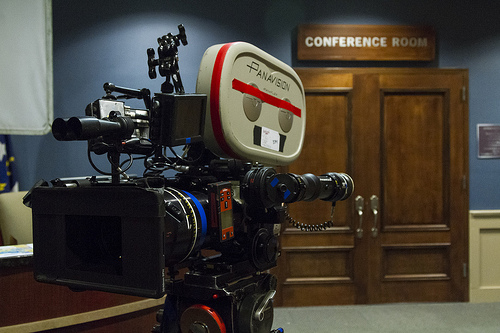
House and Senate leaders Tuesday announced a state budget deal with $10 million for a film grant program.
That’s a major shift from the current incentive, which offers movie and TV productions a 25 percent refund on qualifying expenses, with movies eligible for an individual payout maximum of $20 million.
That incentive is set to expire at the end of this year; supporters of that credit have lobbied heavily for its extension, or the establishment of a new but similar program.
Tony McEwen, legislative liaison for the City of Wilmington, tweeted Tuesday afternoon that the shrunken approach will “kill the industry” and cost thousands of jobs that support families.
Opponents to the credit call it Hollywood welfare and an unfair expense when roads and education have plenty of funding needs.
The budget deal announced Tuesday is not final; it may receive lawmakers’ votes this week.
Story: Midyear film spending surpasses last year’s total
Johnny Griffin, director of the Wilmington Regional Film Commission, called the grant fund amount “woefully inadequate” to maintain, or to grow, current levels of production.
“At this point, since the legislature has not adjourned yet, all we can say based on today’s news is that we are certainly saddened by the $10 million appropriation,” Griffin said. “Based on current levels of production that we have here, it’s certainly a woefully inadequate amount for us to maintain or grow the industry.
“Having said that, the legislature is still in session; (Reps.) Ted Davis, Frank Iler and others are still working very hard on this and will continue to work on it until the legislature adjourns. So we are optimistic that this number will be improved upon and that we will end up with an incentive that will still allow us to remain competitive,” he said. “Until they adjourn, there’s no way to know what we finally end up with.”
Reached by phone Tuesday afternoon, Rep. Susi Hamilton, the Wilmington Democrat and film incentive supporter, said the grant program could be the death knell for the industry here.
“It will end the program in North Carolina,” she said of the $10 million pool. “It’s non-recurring funds. It’s a 50 percent reduction in what they were talking about doing before, which shows they were never serious about that to begin with.”
An initial proposal had suggested a pool of $20 million for the grant fund program, with grants limited to one per production and no more than $5 million for films, $5 million for television series and $250,000 for commercials.
Hamilton also noted the legislature is, at the same time, considering a new cash incentive program to lure other companies.
With the current film incentive program going away, and a comparable one not on the table, she said competing film states like George and Louisiana are likely “celebrating in the streets right now.”
The State Employees Association of North Carolina, opposed to film incentives, commented via Twitter that it’s simply “time to #LetItGo for NC taxpayers.”
The budget compromise sought to balance the myriad state programs and resources demanding dollars, with teacher pay a priority topic. The deal announced Tuesday circled a 7 percent raise for educators.
Said House Speaker Thom Tillis: “Proud to stand with my colleagues and announce the largest teacher pay increase in N.C. history.”
Details about other spending pivots and cuts per the deal were not immediately available.
Griffin noted today’s announcement did not go into detail about how the film grant program would be administered or how the $10 million would be allocated to productions. Without such specifics, he said it would be difficult to gauge the proposal’s potential impact.
“We’ve got ongoing productions that are currently here that are going to be very anxious to know: are they in the running for it or are they not, and if they’re in the running for it, how much?” Griffin said. “Until we see some sort of guidelines, it’s kind of hard to know what the true impact will be.”
Asked what amount would be needed to maintain the state’s current levels of production, Griffin noted numbers recently released by the N.C. Film Office projecting midyear spending at $268 million. Twenty-five percent of that—the tax credit allowed by the current, refund-based incentive—would be $67 million, “which is kind of what we’ve been running,” Griffin said.
“That’s kind of what our level of production has been at the last few years, so anything less than that just ends up being woefully inadequate,” he said. “Just looking back over history and how much has been spent here, and even just looking at the new figures that were put out last week, when you look at the $10 million, you can see that it’s just a pittance compared to what we really need just to maintain current production, or much less to grow it and improve it.”
Bill Vassar, executive vice president of EUE/Screen Gems Studios in Wilmington, reiterated Griffin’s comments, adding that he he was “disappointed” by the $10 million grant fund amount.
In a statement, Vassar said: “The legislative session is likely to last another 72 hours. Rep. Ted Davis and other members of the House are working diligently to find additional funding that will keep the North Carolina film industry alive.
“In the waning moments of the past legislative sessions, film has been recognized as an important economic engine to the North Carolina economy. We are hopeful for similar results in this session before the end of this week,” Vassar said.
Related stories:
- Film incentive hangs in balance as legislative session gets underway
- Film supporters rally to continue tax incentive
- Report details film expenses, incentive payouts
Ben Brown and Jonathan Spiers are news reporters at Port City Daily. They can be reached at [email protected] or (910) 772-6335 and at [email protected] or (910) 772-6313. On Twitter: @benbrownmedia and @jrspiers.
