


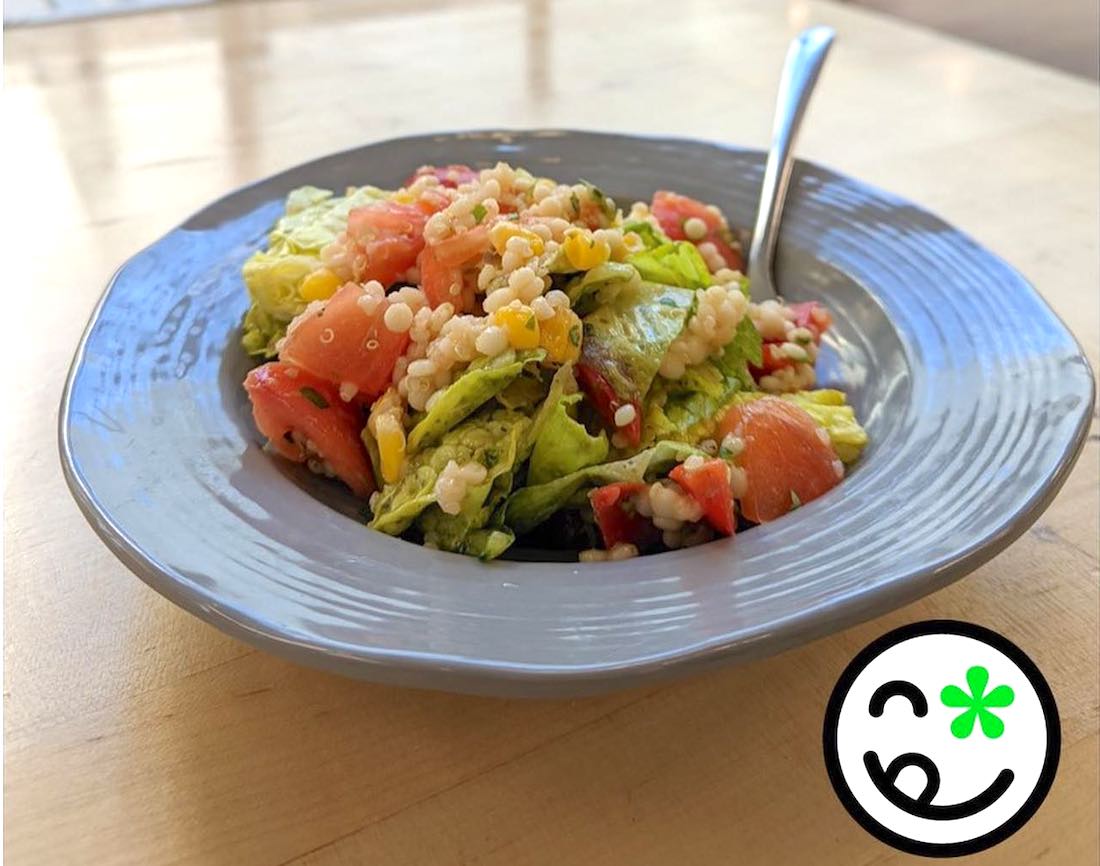
WILMINGTON – Sustainability programs continue to excel at UNCW as a new dining initiative took action last month to help improve greenhouse gas emissions, food waste, and individual carbon footprints.
Aramark food service began the Cool Food Meals Badge initiative last fall at 10 universities across the country: University of Virginia, Slippery Rock University, St. Bonaventure University, University of Mississippi, Florida State University, University of Florida, Arizona State University, University of California – Irvine, and Western Washington University.
The company works with thousands of K-12 and higher education institutions in the U.S. and Canada, and noted more than 35% of dishes served in its dining halls already are vegan and/or vegetarian. It also reported 62% of students were requesting more fruits and vegetables, with 85% likely to order “plant-forward meal options.”
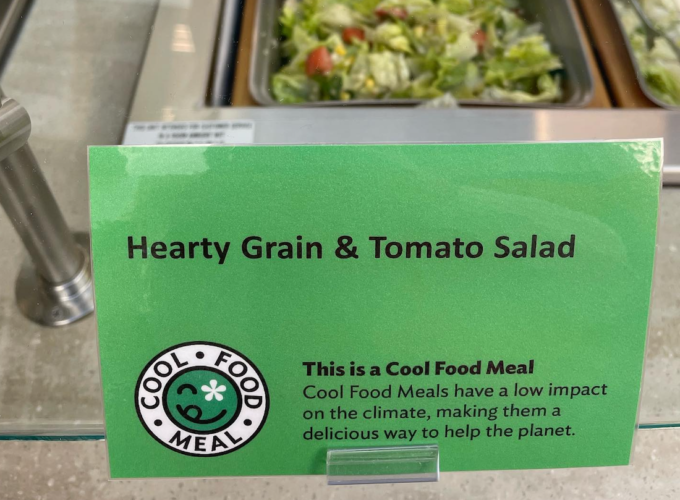
Aramark, which oversees UNCW’s campus dining, started the Cool Food Meals program to identify dishes that have a lower carbon footprint and are more sustainable. An environmental research organization based out of D.C., the World Resource Institute (WRI), helped Aramark critique and perfect hundreds of recipes to receive a Cool Food Meals Badge.
As of January, the badge appears on more than 350 menu items on UNCW’s campus, according to spokesperson Heather Dotchel.
“If a dish’s carbon footprint falls below an established per-meal threshold and meets a nutrition safeguard, it is approved as a Cool Food Meal,” Dotchel stated.
According to Aramark, the per-meal threshold consists of measurements based on the “maximum recommended daily carbon footprint for a person’s diet” — 3.59 kg CO2e/portion for breakfast and 5.38 kg CO2e/portion for lunch or dinner. WRI is able to measure a dish’s carbon footprint by calculating the ingredients and analyzing the output of emissions it took to create. It looks at how much land was used to produce the meal and the miles it traveled through the agricultural supply chain to reach its destination.
Aramark has reported 66% of agriculture-related greenhouse gas emissions come from animal-based foods, so when people eat more legumes and vegetables, it inevitably lowers the carbon footprint.
The badge’s purpose is to make it easy for students to identify and choose climate-friendly choices, Dotchel said. Oftentimes, they’re in a hurry between classes while grabbing a bite on campus, so the badge steers informed decisions even while in a crunch.
“I have been a vegetarian my whole life, and coming to UNCW, I have found that finding vegan and vegetarian items can be difficult at times,” explained UNCW senior Ann O’Neill, a member of the campus sustainability team.
Chef Jonathan White has been leading the helm in the Wagoner kitchen for the past six years. He has observed an uptick in people requesting healthier, plant-based options — at least “a 3% increase in vegan eaters and a 5% increase in vegetarian eaters,” he said.
Wagoner Dining Hall started “Meatless Monday” in February 2016, and UNCW also promotes vegan eating with a Campus Dining Vegan Guide, updated each semester to feature more plant-based options offered across the university grounds. Itemized on the Wagoner Dining Hall menu are baked goods, vegan burgers and nuggets, cheeses and sandwiches, among other options.
The UNCW Campus Dining administration team — Malissa Ivey, Krista McSwaim, Kristen Shelton — said Cool Food Meals will provide a plethora of new eats, like falafel grain bowls and tofu mixed salads, as well as tag old standards, like French fries and flatbread pizzas.
“This gives students the opportunity to try new things but also makes enjoying their favorite staples with a climate-healthy incentive,” Ivey said.
UNCW is affecting change beyond the plate as well.
“Before the Cool Food Meals program, UNC-Wilmington campus dining was already committed to reducing our impact from food packaging, as this is one of Aramark’s sustainability priorities,” Shelton said.
The campus stopped using plastic trays, non-recyclable cups, and plasticware 10 years ago, and have been recording the changes and how it has helped decrease greenhouse gas emissions. Its sustainability guide notes the campus is saving 8,782 gallons of water a day by doing away with plastic trays.
Today, takeout containers and utensils are made from compostable plant-based materials, according to Shelton. Plastic and paper to-go containers, soup bowls, wrappers, cutlery, cups, and white and brown napkins are used in all on-campus dining facilities at UNCW, including Wagoner, Dub’s Café, and Hawk’s Nest.
UNCW’s goal is to have less than 10% of campus waste end up in landfills; it also recycles “unusual” products, such as styrofoam, rigid plastics, plastic film, electronics, and batteries — items typically disposed of in garbage facilities. For campus dining, fryer oil is recycled as well, in essence eliminating sewage blocking that affects the health of local wildlife and their habitats.
“It is important that we educate the community on the impact of purchased items on greenhouse gas emissions and regional resiliency,” UNCW chief sustainability officer Kat Pohlman stated in a release.
UNCW produces an estimated 3,144,150 pounds of waste a year, according to a 2018 report. Since 2016, composting has become the campus alternative to tossing food waste into trash bins.
Two 40-gallon sized trash bags were analyzed from a dumpster on campus, standing in as a model for the waste production at UNCW. In the sample, 20% to 40% of the waste accounted for was compostable product. Material from Wagoner Dining Hall and Dubs Café are composted through waste pulping, which was installed five years ago to break down plate scrapings and unused foodstuff from kitchen prep.
UNCWs goal is to reach zero-waste practices — in line with the UNC System overall., which hopes to attain carbon neutrality by 2050. UNCW was the first among the universities to reduce energy by 30%, according to its sustainability statistics. In effect, it has reduced its campus “carbon footprint by about 60 metric tons per year” through composting efforts alone.
Cool Food Meals moves the needle further toward sustainability, as it also partners with local farms to procure fresh ingredients. Wagoner Dining Hall receives food and product from 22 different farms and gardens throughout Wilmington and surrounding areas, from Burgaw to Castle Hayne to Rocky Point: Humble Roots Farm, LINC Urban Farm, Red Beard Farms, Pridgen Farms, Wonderland Farm and Shelton Herb Farm, among others. Working with locals means UNCW decreases the overproduction of shipping materials, as well as reduces the amount of pollutants released from transportation in shipping food products.
Some students already are in support for the positive effects the Cool Food initiative can create.
“A plant-based diet has proven to be healthier and provide more sustainable and long-lasting energy than one consisting of heavy processed foods and very fatty meats,” environmental science major Rachel Tilley stated. “[It’s] better for the environment because plant production is less environmentally degrading than the processing and production of meat.”
Exact statistics as to how the Cool Food Meals will impact student and staff dining behaviors at UNCW are yet to be determined. Though, it will help Aramark reach its benchmark of reducing emissions by 25% by 2030.
Have tips or comments? Email [email protected]
